Families who approach vehicle shopping with the same discernment they bring to choosing schools, neighborhoods, and travel experiences are no longer satisfied with “good enough.” Today’s most compelling family SUVs are not simply spacious; they are thoughtfully composed environments that anticipate needs, soften daily frictions, and elevate the routine into something quietly enjoyable.
What follows is a refined look at family-focused SUV features—five exclusive insights that rarely make the marketing headlines, yet have an outsized effect on how gracefully your family moves through everyday life.
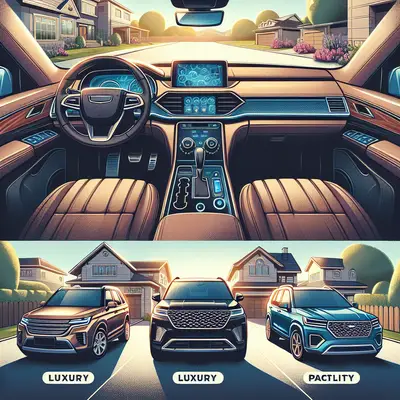
The Architecture of Calm: Cabin Layout That Reduces Friction
A truly family-centric SUV is designed around choreography: who enters first, where bags land, how a child buckles in, where devices live, and how easily everyone can exit without negotiation.
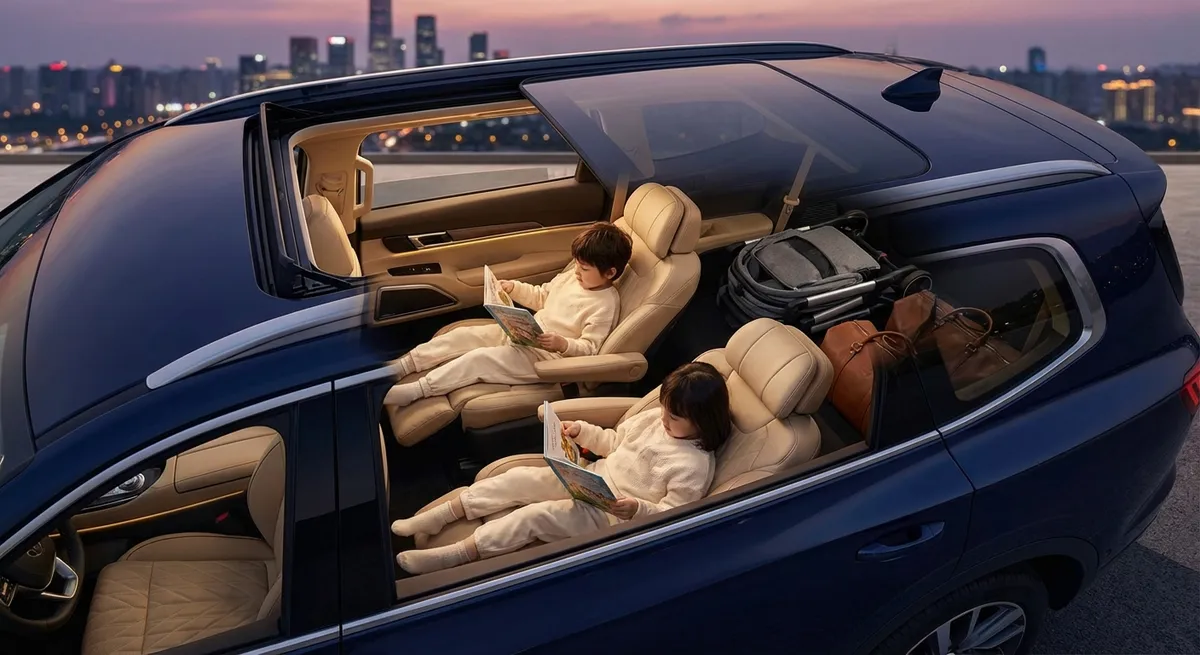
Begin with the “pathways” through the cabin. Wide door openings, a nearly flat floor, and second-row seats that slide and tilt without requiring the removal of a child seat dramatically reduce tension during school runs or airport pickups. Thoughtful third-row access—such as one-touch tumble seats that still preserve a clear walkway—turns what is usually a compromise into an asset.
Premium family SUVs increasingly use layered storage to preserve visual calm. Hidden compartments for tablets and headphones, discreet hooks for bags that prevent footwell clutter, and lidded console bins that close flush with surrounding trim contribute to a sense of order. This isn’t just aesthetic; visual decluttering has been linked to reduced stress and improved focus, which is especially meaningful on longer journeys.
Look for:
- Second-row seats that slide and recline independently for each passenger
- Third-row access that does not require uninstalling child seats
- Multiple, covered storage areas to keep essentials close yet out of sight
- Door pockets designed to hold large water bottles without encroaching on legroom
These architectural details do not advertise themselves on billboards, but over thousands of miles they shape whether your SUV feels like a composed retreat—or a mobile closet.
Acoustic Serenity: The New Benchmark of Family Comfort
For families, noise is more than an inconvenience; it directly affects fatigue, mood, and how well children rest on the move. The most sophisticated family SUVs treat acoustic refinement as a core safety and wellness feature, not an afterthought.
Seek out models that discuss structural noise control rather than just “enhanced insulation.” A rigid body structure, laminated side glass, and isolated suspension components together create a quieter cabin without relying on thick, heavy materials. Some luxury-leaning family SUVs also use acoustic windshields designed to reduce high-frequency noise—exactly the sounds that can be most grating on longer drives.
More advanced systems employ active noise cancellation, using microphones to detect engine and road noise and then generating counter-frequencies to neutralize them. While the technology often appears in performance or luxury vehicles, it has remarkable benefits for families: less droning at highway speeds, softer conversations in the second and third rows, and a better environment for napping children.
When you test-drive:
- Drive the same stretch of highway in multiple SUVs and compare the ease of conversation between the front and third row
- Pay attention to how often you need to raise your voice
- Turn off the audio system entirely and listen for wind around mirrors and roof rails
- Note whether third-row passengers can comfortably hear spoken directions without repetition
Over time, acoustic serenity becomes one of the most valued—and least advertised—luxury features for families.
Intelligent Space: Configurability That Adapts, Not Just Expands
More volume is easy to market. True sophistication lies in how that volume can be reconfigured without turning every errand into a puzzle.
Modern family SUVs offer multiple seating configurations, but the discerning buyer looks for intuitive transformations. Power-folding third rows that lay completely flat at the touch of a button, second-row outboard seats that fold with a single lever while preserving a level cargo floor, and clearly marked latches that don’t require guesswork are worth prioritizing.
Another quiet differentiator is the “usable” cargo opening. A tall, wide hatch with minimal intrusion from wheel arches, combined with a low load floor, determines how effortlessly strollers, sports gear, or luggage move in and out. The tailgate itself can be a point of refinement: hands-free operation that works consistently, gesture sensors that aren’t overly sensitive, and programmable opening heights for low garages add up to daily convenience that feels almost bespoke.
Consider:
- Can you fold and restore seats quickly with one hand while holding a bag or a child’s hand?
- Does the third row meaningfully accommodate older children and adults, or is it essentially for emergencies only?
- Can your largest stroller or suitcase fit lengthwise without contortion?
- Are there tie-down points, bag hooks, or rail systems to secure items and prevent shifting?
The most family-savvy SUVs create a sense of “transformable order”: the cabin moves from passenger-focused to cargo-focused and back again with minimal effort and no sense of compromise.
Subtle Tech, Thoughtful Control: Digital Features That Stay in the Background
Technology in family SUVs is no longer about sheer screen count; it’s about restraint, clarity, and the ability to tailor the experience to different ages and preferences.
An elegantly executed infotainment system emphasizes legibility and responsiveness over spectacle. Physical controls for essentials—temperature, volume, defrost—remain vital. They allow parents to make adjustments by feel, without navigating multi-layered menus while managing family dynamics on the move.
Profile-based customization is a particularly refined touch. Systems that remember driver and passenger seat positions, mirror adjustments, climate preferences, and even frequently used navigation destinations save time and reduce small frictions. Some vehicles extend this personalization to ambient lighting, customized home screens, and favored drive modes, so the SUV feels subtly tailored to each adult driver.
For children, rear USB-C ports in both the second and third rows, integrated device pockets, and optional rear-seat entertainment that can stream independently or mirror personal devices offer flexibility without turning the cabin into a tangle of cables. The most considerate designs route charging and HDMI cables through discreet channels, preserving a clean aesthetic.
Focus on:
- Whether essential controls can be adjusted without taking eyes off the road for more than a brief glance
- The speed and intuitiveness of the user interface during a test drive, not just in a showroom demo
- Availability of multiple, well-placed charging ports across all rows
- The ability to disable, limit, or configure rear screens and apps to align with your family’s media philosophy
The best technology in a family SUV is not the loudest feature in the brochure. It is the quiet companion that supports your routines without demanding constant attention.
Wellness on the Move: Subtle Comfort and Safety Touchpoints
Beyond traditional ratings and feature checklists, a new generation of family SUVs is embracing a more holistic view of wellness—subtle design decisions that keep everyone more comfortable, more alert, and less stressed.
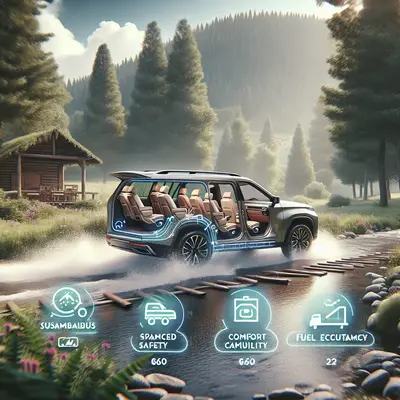
Seats are an essential starting point. Multi-contour front seats with adjustable lumbar support and extendable cushions can significantly reduce fatigue on longer journeys. In the second row, seats that offer both heating and ventilation, additional recline, and properly sized headrests respect the comfort of older children and adult passengers, not just those in the front.
Climate systems now go far beyond basic dual-zone controls. Tri- or quad-zone climate with vents thoughtfully placed for each row allows parents to maintain a comfortable temperature without overcooling younger passengers. Some premium SUVs also incorporate cabin air filtration systems and particulate sensors, especially valuable for families living in urban areas or regions with seasonal wildfires or high pollen counts.
Safety assistance technologies are most valuable when tuned with nuance. Systems like adaptive cruise control, lane-keeping assistance, blind-spot monitoring, and rear cross-traffic alert can reduce cognitive load for parents, but should feel supportive rather than intrusive. Look for clear, gentle alerts and the ability to customize sensitivity and intervention levels.
Additional wellness-oriented touches to note:
- Panoramic roofs with effective sunshades, balancing natural light with heat control
- Soft-touch materials in high-contact areas, which feel more welcoming and are often easier to keep looking pristine
- Rearview camera systems with multiple angles and high resolution, improving visibility when parking around schools and busy driveways
- Quiet, smooth powertrains that deliver sufficient power without harsh shifts or abrupt throttle response
Collectively, these details create an environment that allows everyone—driver and passengers alike—to arrive feeling more restored than drained.
Conclusion
For families with a refined perspective on how they wish to live—and travel—an SUV is more than a tool; it is an extension of their standards, values, and pace of life. While marketing often spotlights horsepower, screen size, or cargo volume, the features that most profoundly influence daily satisfaction are quieter: the architecture of the cabin, the depth of acoustic refinement, the intelligence of space, the discretion of technology, and the subtle pursuit of wellness.
Approach your next SUV evaluation with these lenses, and you’ll begin to sense which vehicles merely accommodate families, and which have been truly crafted for them. The difference reveals itself not in a single test drive, but in the effortless way your SUV supports your family’s rituals, year after year.
Sources
- [National Highway Traffic Safety Administration (NHTSA) – Vehicle Safety Features](https://www.nhtsa.gov/road-safety/vehicle-safety-features) - Overview of modern safety and driver-assistance technologies relevant to family vehicles
- [Insurance Institute for Highway Safety (IIHS) – Ratings & Research](https://www.iihs.org/ratings) - Provides crash-test data and evaluations of vehicle structure, restraint systems, and safety tech
- [U.S. Department of Energy – Fuel Economy Guide](https://www.fueleconomy.gov/feg/findacar.shtml) - Official data on fuel economy and energy consumption, useful when comparing family SUVs
- [Consumer Reports – Guide to Car Noise and Ride Comfort](https://www.consumerreports.org/cars-driving/car-noise-and-ride-comfort-a8952524189/) - Independent insights into cabin noise, ride comfort, and how they affect fatigue
- [Harvard Health Publishing – How Noise Affects Health](https://www.health.harvard.edu/staying-healthy/how-noise-affects-your-health) - Explores the broader health impacts of noise exposure, underscoring the value of quieter vehicle cabins
Key Takeaway
The most important thing to remember from this article is that this information can change how you think about Family Features.