Choosing a family SUV today is less about sheer size and more about how gracefully it integrates into the choreography of daily life. Beyond spec sheets and showroom gloss, the true test is whether a vehicle can quietly elevate school runs, weekend escapes, and late-night airport pickups without adding friction. This is the realm of refined family features—details that don’t shout for attention, but consistently earn it.
Below are five exclusive, deeply considered insights that help discerning families look past the obvious and into what truly shapes long-term satisfaction.
1. Cabin Flow, Not Just Cabin Space
Many SUVs boast “class-leading” cargo volume or generous legroom, but sophisticated family comfort is less about raw dimensions and more about flow: how people, bags, strollers, and snacks move through the cabin with minimal interruption.
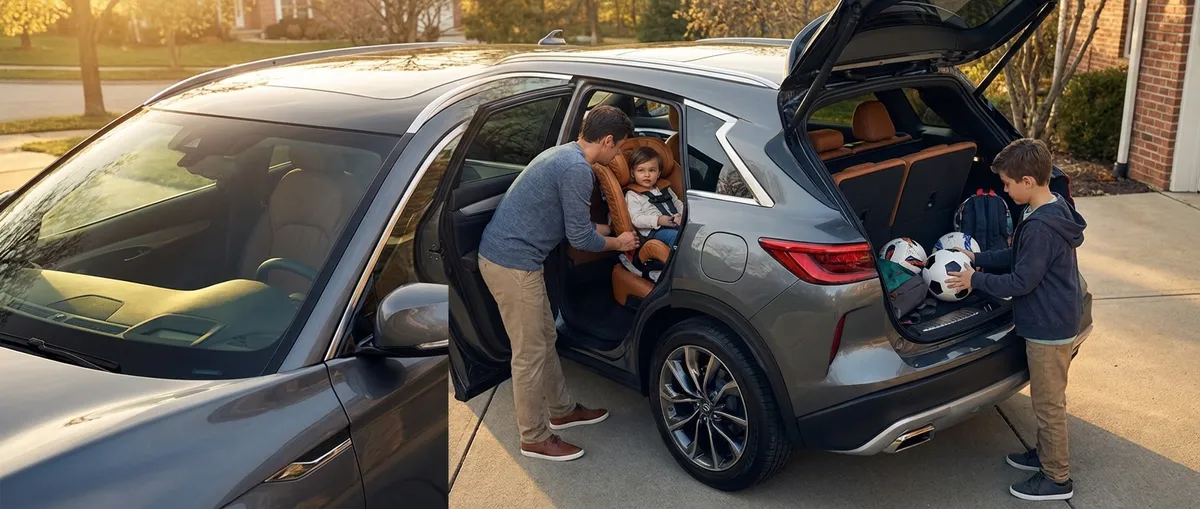
Look for second-row designs that allow children to slip past installed car seats without forcing adults to unbuckle and re-buckle hardware. Sliding and reclining second-row seats can subtly adjust the balance between cargo and passenger space as needs change day by day. Flat load floors and low liftover heights transform seemingly simple tasks—like loading a sleeping toddler in a stroller or a cello case—into effortless movements.
Attention to door geometry matters as well. Wide-opening rear doors, high rooflines at the door edge, and thoughtfully shaped door sills reduce head bumps and awkward angles. Premium families often discover that the most “comfortable” cabin is not the one with the highest numbers on paper, but the one that requires the fewest compromises in motion—entering, buckling, exiting, loading, and reorganizing on the fly.
2. The Multi-Layered Soundscape of a Family Cabin
Noise control in a family SUV is about more than luxury; it is about preserving calm in an inherently dynamic space. Babies nap, teens stream, parents take work calls, and everyone shares the same acoustics. A sophisticated SUV blends mechanical refinement with clever sound management to support this layered reality.
Seek models that combine laminated front glass, generous insulation, and careful door sealing with active noise cancellation or adaptive engine mounts. The goal is not silence for its own sake, but the removal of harshness—wind rush around mirrors, coarse tire hum, or abrupt engine drone during highway merges. This allows in-cabin conversations to happen at a natural volume and helps back-seat passengers hear media clearly without overwhelming the driver.
Equally important is how the audio system is tuned. Some upscale systems offer “driver focus” modes, rear entertainment isolation, or multiple listening zones—subtle capabilities that keep a bedtime audiobook in the third row from clashing with navigation prompts up front. Over a long ownership period, this curated soundscape becomes one of the most quietly luxurious family features of all.
3. Intuitive Tech that Ages Gracefully with Children
Children grow; dashboards do not. The most refined family SUVs anticipate this by offering technology that feels approachable for a preschooler today and not dated for a teenager tomorrow.
Prioritize clean, uncluttered interfaces over sheer screen size. Large touchscreens are impressive on test drives, but deep, complicated menus can frustrate a rushed parent trying to adjust climate for the third row while navigating city traffic. Physical shortcuts for frequent functions—defroster, volume, drive modes—remain invaluable, especially when shared between multiple drivers or visiting grandparents.
Consider how the SUV handles device integration. Multiple USB-C ports across every row, a mix of wired and wireless smartphone connectivity, and rear charging points that are easy to reach from child seats significantly reduce tech-related disputes. Over-the-air software updates can keep infotainment fresh and compatible with evolving apps, extending the vehicle’s digital relevance.
A refined detail to watch for: how well voice control actually works with background noise and children chatting. Systems that reliably understand natural speech make it easier to queue up playlists, adjust climate, or find nearby food without diverting precious attention from the road.
4. Climate as Comfort, Not Just Temperature
Family comfort is rarely uniform. One child runs hot, another runs cold, and the driver simply wants a clear windshield and a composed cabin. Sophisticated SUVs manage this complexity with more nuance than a generic “tri-zone climate” bullet point might suggest.
Look closely at vent placement rather than just zone count. Ceiling-mounted vents in the second and third rows can deliver airflow more evenly, especially to rear-facing child seats. Adjustable vents at multiple heights help different ages and body sizes find comfort without directing freezing air straight at a child’s face.
Features like heated and ventilated front seats are well-known, but families often underappreciate heated rear seats, heated steering wheels, and rapid defrost systems until that first icy school run. In hotter climates, available rear seat ventilation, strong air conditioning capacity, and remote start with climate preconditioning can transform summer pickups from draining to manageable.
The most refined implementations weave climate into the broader driving experience: automatic recirculation in polluted or dusty environments, humidity sensors that minimize fogging, and gentle fan ramp-up so sleeping passengers are not jolted awake when the system kicks in.
5. Everyday Rituals, Elegantly Supported
The truest test of a family SUV is found not in dramatic road trips, but in the small rituals that repeat—packing sports gear, grocery loading, curbside drop-offs, and the late-evening return home when everyone is tired.
Explore how an SUV supports these micro-moments. Hands-free tailgates that respond reliably (without theatrical leg choreography), low cargo floors that spare your back, and configurable cargo areas with underfloor storage for emergency kits, reusable bags, and muddy shoes all speak to thoughtful design. Divided storage bins prevent lunch boxes from tumbling across the trunk; integrated hooks keep backpacks off the floor and away from spilled milk.
Inside, look for cupholders and storage that accommodate modern family life: large refillable water bottles, snack containers, and devices. Subtle cabin lighting that softly illuminates door handles, footwells, and console areas avoids the harshness of a fully lit cabin while helping children find dropped items at night.
Even the nature of the drive itself matters. Predictable, linear acceleration and well-tuned brakes help avoid motion sickness and spilled drinks. Smooth, composed suspension tuning—not too soft, not artificially firm—reassures new drivers in the household and keeps sleeping infants undisturbed over imperfect city streets. These are not headline features, but they are precisely the details discerning families tend to appreciate most, long after the test drive glow has faded.
Conclusion
The finest family SUVs distinguish themselves not by a single heroic specification, but by an accumulation of considerate decisions: how the cabin flows around installed car seats, how calmly conversations unfold at highway speed, how naturally technology fits into the lives of both children and adults, how carefully comfort is tailored across three rows, and how beautifully everyday rituals are supported.
For families who view their SUV as a long-term companion rather than a disposable appliance, these refined details are where true value resides. Look past the brochure highlights and into how the vehicle will behave at 7:45 a.m. on a rainy Tuesday—that is where the subtle art of a family-first SUV truly reveals itself.
Sources
- National Highway Traffic Safety Administration (NHTSA) – Vehicle Safety Features – Overview of key safety and comfort technologies relevant to family vehicles
- Insurance Institute for Highway Safety (IIHS) – Vehicle Ratings – Independent crash-test and safety evaluations that complement feature-focused assessments
- Carnegie Mellon University – Human-Computer Interaction Institute – Research on interface design and usability that informs discussion of intuitive in-vehicle tech
- Ford Motor Company – Active Noise Control Technology – Manufacturer explanation of how active noise cancellation improves cabin refinement
- U.S. Department of Energy – Reducing Vehicle Noise and Vibration – Technical context for noise and vibration control techniques used in modern SUVs
Key Takeaway
The most important thing to remember from this article is that this information can change how you think about Family Features.