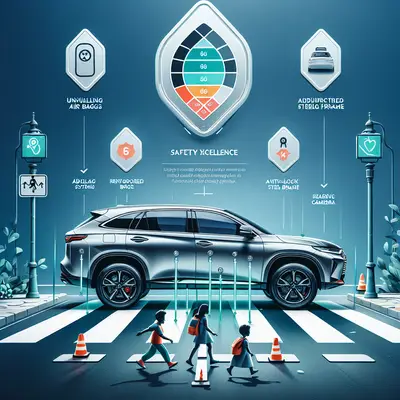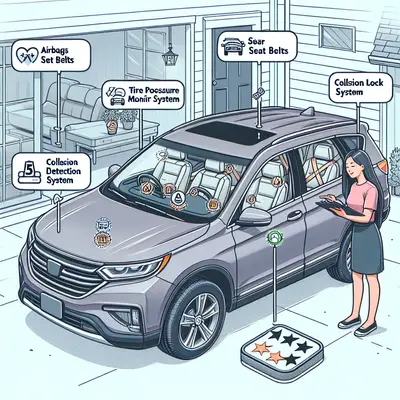
Safety ratings are often treated like a checkbox—five stars, a top pick, and the conversation is over. For discerning families, that is only the opening line. Behind each number lies a story about engineering discipline, design philosophy, and how an SUV will behave in those rare, unplanned seconds that matter more than all the planned ones. This is where safety evolves from a brochure statistic into a quiet confidence that travels with you on every school run and weekend escape.
In this guide, we look past the headline scores and explore how families can read safety ratings with nuance. These five exclusive insights are crafted for those who expect more than reassurance—they expect rigor, refinement, and a deeper understanding of what “safe” truly means in a modern family SUV.
Beyond Five Stars: Understanding the Character of a Safety Rating
The most visible figures—five-star badges, “Top Safety Picks,” gold medallions—are useful shorthand, but they compress a complex portrait into a single number. When families rely solely on that summary, they risk missing meaningful differences in how an SUV protects front passengers versus those in the second or third row, or adults versus children.
Each testing organization has its own lens. The National Highway Traffic Safety Administration (NHTSA) focuses on crashworthiness and rollover resistance in standardized scenarios. The Insurance Institute for Highway Safety (IIHS), funded by the insurance industry, often pushes the envelope with tougher crash configurations and more granular evaluations of structure, restraints, and headlights. European data from Euro NCAP, although not directly transferable, can hint at broader trends in global platforms. For a sophisticated view, treat the overall rating as the headline and the sub-scores—frontal crash, side impact, rollover risk, child occupant protection, and crash-avoidance technology—as the chapters. The true “character” of a family SUV’s safety performance emerges in that detail.
Insight 1: Second- and Third-Row Safety Is Not a Footnote
For families, the second row is often the primary cabin; in three-row SUVs, the third row becomes a permanent neighborhood of car seats, snack cups, and siblings. Yet many buyers focus on front-impact scores and driver protection, overlooking how well the vehicle protects occupants farther back. This is where the safety narrative can change dramatically between seemingly similar SUVs.
IIHS’s moderate overlap and side-impact tests, as well as NHTSA’s side crash ratings, offer clues about how effectively energy is managed along the cabin length. Pay attention to child-specific sub-ratings and notes on “rear occupant protection” where available. Some automakers deliberately reinforce the rear structure and optimize side-curtain airbags to protect all three rows, while others prioritize the front. Additionally, examine whether seat-mounted side airbags and full-length curtain airbags reach the third row; in some models, they simply do not. For families who keep children in booster seats longer—and prioritize extended rear seating—these distinctions matter more than a generalized five-star label.
Insight 2: Advanced Driver Assistance Is Only as Good as Its Tuning
Most new family SUVs come with a familiar alphabet of digital guardian angels: AEB (automatic emergency braking), LKA (lane-keeping assist), ACC (adaptive cruise control), BSD (blind-spot detection). Safety rating organizations increasingly factor these technologies into their assessments, and with good reason: preventing a crash is more powerful than simply surviving one. But not all systems are created, or calibrated, equally.
IIHS’s evaluations of front crash prevention against vehicles and pedestrians reveal meaningful gaps between brands in both daylight and low-light performance. Some systems respond assertively and early; others react late or not at all in more demanding scenarios. For families frequently driving at dawn school drop-offs, dusk activities, or in busy urban corridors, that nuance is critical. Look for vehicles that not only advertise these features, but perform well in independent tests and, ideally, receive top marks in pedestrian detection. Then, when you test drive, sense how the systems behave: Are they smooth, predictable partners—or abrupt, intrusive, and likely to be disabled? The safest technology is the one you are willing to leave on every day.
Insight 3: Structural Integrity and Small Overlap Crashes Reveal True Discipline
Modern SUVs are generally excellent in traditional frontal crashes, but the small overlap collision—where only a corner of the vehicle strikes an object, like a tree, guardrail, or oncoming vehicle—has become the benchmark for structural honesty. This type of impact, which can bypass the strongest parts of the front frame, exposes weaknesses in design and material choices. It is here that a premium family SUV earns its reputation, not simply in marketing claims.
When reviewing IIHS small overlap test results (both driver- and passenger-side, where available), focus on the detailed commentary: Was the occupant compartment preserved, or did the A-pillar, dashboard, or footwell intrude significantly? Were injury measures low for the head, neck, chest, and legs? Did the airbags and seatbelts control the dummy’s movement, or did it slide off the airbag or hit hard interior surfaces? These subtleties indicate whether an automaker engineered safety into the platform from the beginning or adapted late for testing. A structurally disciplined SUV often performs consistently across multiple crash types—a reassuring signal for families who cannot predict the exact nature of a potential collision.
Insight 4: Child Safety Is a System, Not Just a Seat
Crash-test dummies modeled after different body sizes have transformed how ratings organizations and manufacturers think about protection. For families, the child dummies and the associated sub-ratings tell a crucial story: the interaction between the car, the car seat, and the young occupant. A five-star rating with vague child performance commentary is not as revealing as a slightly lower overall score with exceptional child protection notes.
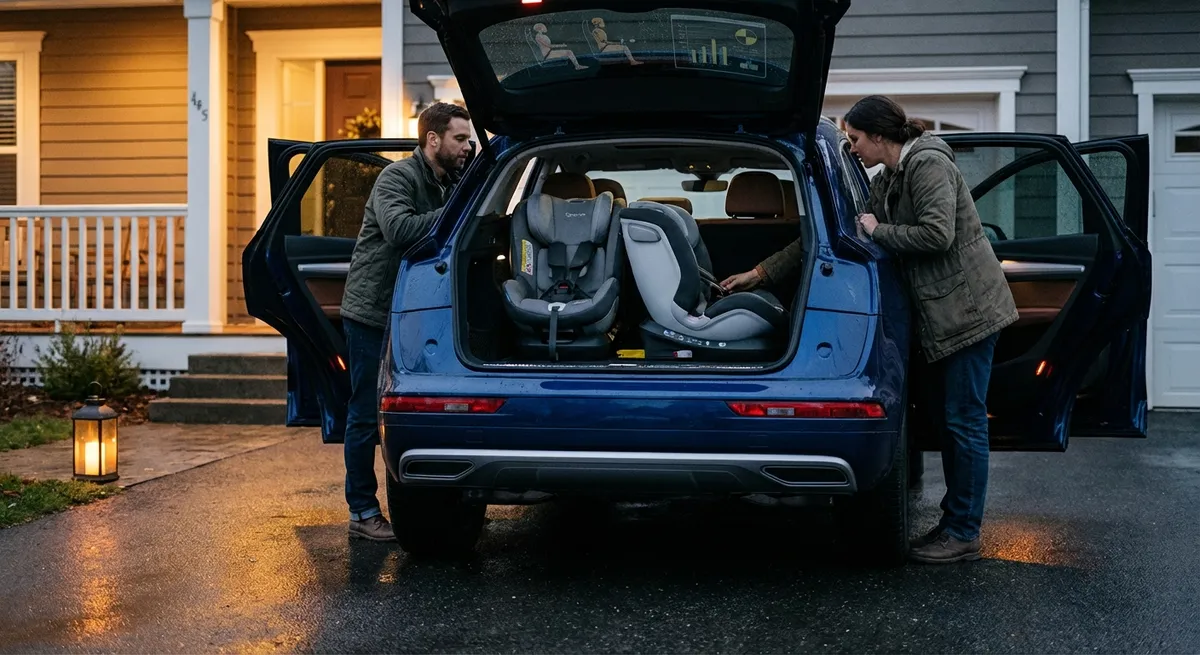
Look closely at how easy it is to achieve proper installation. While ratings capture injury metrics, they do not always reflect daily realities: buried LATCH anchors, fixed head restraints that complicate high-back boosters, or sculpted rear seats that make three-across configurations nearly impossible. Reputable child passenger safety resources, as well as NHTSA guidance, emphasize that misuse or suboptimal installation undermines even the best engineering. For a sophisticated view, treat the rear seating environment like a child safety ecosystem: anchors, belt geometry, seat contouring, airbag coverage, and clear labeling must work in tandem with your particular seats and stages—from rear-facing infant carriers to pre-teens in seat belts.
Insight 5: Lighting, Visibility, and Rollover Dynamics Shape Everyday Safety
Safety ratings increasingly recognize that what you can see—and how a vehicle behaves in evasive maneuvers—matters as much as how it protects you once contact is made. Headlight performance, in particular, has emerged from the shadows. IIHS now evaluates headlights for reach, glare, and curve illumination, and those results can vary widely within the same model line depending on trim and technology (halogen vs. LED vs. adaptive units).
For families driving frequently at night or in poor weather, a top-tier headlight rating is not a luxury; it is a primary safety asset. Combine this with NHTSA’s rollover risk scores, which reflect the vehicle’s center of gravity and stability control performance. Larger SUVs once carried meaningful rollover penalties; modern engineering and electronic stability control have dramatically improved the picture, but differences remain between tall, softly sprung vehicles and those with a more grounded stance. A refined family SUV does more than shine bright light down the road; it pairs that visibility with poised stability, giving parents the confidence to make sudden lane changes or emergency maneuvers without drama.
Conclusion
Safety ratings, at their best, are far more than marketing trophies. They are a language—a precise, technical vocabulary that can empower families to choose an SUV aligned with their real-world lives, not only their ideals. When you read beyond the headline score, a richer portrait appears: how diligently the rear rows are protected, how gracefully advanced driver aids intervene, how honestly the structure holds its shape, how intuitively children’s seats integrate, and how confidently the SUV lights and holds the road.
For families who view their vehicle as an extension of their home—a moving space of protection, routine, and shared moments—this nuanced understanding turns safety from a statistic into a standard. The most satisfying family SUVs are not merely “highly rated”; they are coherently engineered around the people they carry, protecting them quietly, consistently, and with the kind of subtle excellence you feel every time you close the door and drive away.
Sources
- [NHTSA 5-Star Safety Ratings Overview](https://www.nhtsa.gov/ratings) - Explains how U.S. government crash tests are conducted and how star ratings are determined, including frontal, side, and rollover evaluations.
- [IIHS Vehicle Ratings and Crash Test Details](https://www.iihs.org/ratings) - Provides in-depth results for crashworthiness, crash avoidance, pedestrian detection, and headlight performance across a wide range of SUVs.
- [NHTSA Child Safety and Car Seat Guidance](https://www.nhtsa.gov/car-seats-and-booster-seats) - Offers authoritative information on choosing and installing car seats, LATCH systems, and best practices for child passengers.
- [IIHS Small Overlap Frontal Test Explanation](https://www.iihs.org/ratings/test-types/small-overlap-front-test) - Describes the methodology and significance of small overlap crash testing and how it reveals structural strengths and weaknesses.
- [U.S. Department of Transportation – Electronic Stability Control Information](https://www.nhtsa.gov/equipment/electronic-stability-control-esc) - Details the role of ESC in preventing rollovers and loss-of-control crashes, especially relevant for taller vehicles like SUVs.
Key Takeaway
The most important thing to remember from this article is that this information can change how you think about Safety Ratings.