In the last few days, a Bored Panda feature on hilariously botched graphic design and word spacing has been making the rounds, reminding the internet that tiny details can completely change meaning. A misplaced space can turn a polite storefront into an unintentional joke—and a poorly placed line on a road sign can become a real‑world hazard. It’s lighthearted content, but beneath the memes sits a quietly serious truth: details are destiny, especially when lives are involved.
In the world of family SUVs, safety ratings live or die by this same principle. The difference is that instead of a confusing menu or a cringe‑worthy billboard, the stakes involve your partner in the passenger seat and your children in the second row. Just as designers are being publicly called out for sloppy spacing, automakers and safety agencies are under intensifying scrutiny as crash‑test videos, IIHS headlines, and NHTSA star scores go viral within hours. The safety conversation has never been more public—or more unforgiving.
Below are five refined, practical insights drawn from this cultural moment that every family considering a new SUV should understand—especially if you care about the “hidden spacing” in safety: the tolerances, clearances, margins, and micro‑decisions that decide how your vehicle behaves when it truly matters.
The Fine Print Behind Every Star: Why “5‑Star” Isn’t the Whole Story
The viral “bad spacing” images circulating online show how a single misaligned letter can camouflage the real message. Safety ratings can function the same way. Many SUVs now boast a “5‑star” NHTSA overall rating or a coveted IIHS “Top Safety Pick+” badge, but those polished labels compress a complex test matrix into a single, tidy symbol. Families who stop there may miss critical nuance.
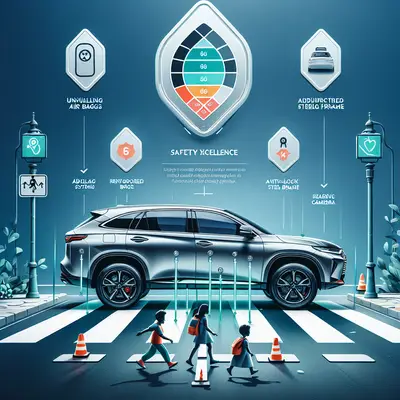
Modern ratings are divided into tightly defined subtests: moderate and small‑overlap frontal crashes, side impacts with a moving barrier and a heavier SUV, roof strength, head restraint geometry, and increasingly, pedestrian impact and nighttime crash‑avoidance performance. It’s entirely possible for an SUV to earn excellent scores in frontal crashes yet reveal vulnerabilities in rear‑seat protection or child‑seat compatibility. Think of the headline rating as the storefront sign; the subtests are the fine print that tells you whether your particular family—two adults, a toddler in a rear‑facing seat, a tween in a booster—will actually be protected in the scenarios that matter to you.
When you research, skip the banner graphic and click through to the detailed charts. Look for how the vehicle protects the rear occupants in small‑overlap tests, how the head restraints perform across seat positions, and whether the vehicle has been evaluated under the newest, tougher procedures (like the IIHS updated moderate overlap test that emphasizes back‑seat protection). Just as a carefully spaced logo shows respect for the reader, precise, transparent subtest performance shows real respect for your family.
Crash‑Test Geometry: How Millimeters Decide Your Child’s Night
The design fails making the rounds online are a masterclass in how margins, kerning, and alignment make text legible—or incomprehensible. Crash safety engineering is a similar game, played with steel, aluminum, and high‑strength adhesives. What looks like an anonymous SUV silhouette from the curb is actually a three‑dimensional geometry of load paths, designed to manage millisecond‑by‑millisecond energy transfer.
For families, this geometry matters most in two places: the rear seating area and the door structures. Subtle differences in seat‑belt anchor locations, the stiffness of the floorpan, and the spacing between the front seats and the second row can dramatically affect how a child or teenager moves in a crash. In the latest IIHS testing, some SUVs that performed brilliantly for front occupants showed worrisome chest and head injury measures for rear passengers—largely due to how restraints interact with growing bodies. The “spacing” in that restraint geometry is as consequential as letter spacing on a safety warning label.
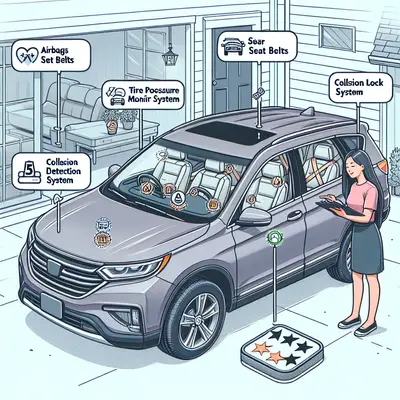
When shopping, don’t just admire the leather stitching; ask about adjustable rear head restraints, seat‑belt pretensioners in the second row, and the presence (or absence) of rear side‑impact airbags. Examine where LATCH anchors are positioned, and how easily you can achieve a flat, secure installation without bending or twisting the belt path. A luxury cabin is only truly premium when its invisible geometry has been tuned for the smallest occupants first.
The New Frontier: Reading Safety Ratings Through the Lens of Driver Assistance
Just as design pedants online have started to notice when typography and layout don’t meet modern expectations, safety watchdogs are increasingly judging SUVs not solely on crashworthiness, but on crash avoidance. The headlines may be about laughable posters, but the deeper cultural trend is sharper: we are collectively less forgiving of design that lets preventable errors slip through. In vehicle testing, this has translated into tougher evaluations of driver‑assistance systems like automatic emergency braking (AEB), lane‑keeping assistance, and pedestrian detection.
Recent IIHS updates put a spotlight on nighttime performance and pedestrian scenarios, areas where early‑generation systems sometimes acted like poorly spaced road signs—technically present, but practically confusing or unreliable. For a family SUV that will be used for dark‑school‑run mornings or late‑evening returns from activities, this is not a theoretical exercise. You want a system that can detect a child darting into the street, not just a test‑dummy strolling in broad daylight.
When you cross‑shop SUVs, pay attention not merely to whether features like AEB and blind‑spot monitoring are available, but how they are rated by independent bodies. Some vehicles now earn specific commendations for robust pedestrian detection and strong lane‑keeping at highway speeds; others only meet the minimum baseline. Ask to see the latest software version on showroom vehicles, and request a demonstration on a safe test route. In 2025, a premium family SUV should not just look intelligent—it should prove it in subtle, consistent ways, well beyond the brochure bullet points.
Child Seats, Boosters, and the “Real‑World Fit” That Ratings Only Hint At
The humor in those viral “cursed spacing” photos often comes from the gap between intent and execution: someone clearly meant well, but a few millimeters of misplacement transformed a wholesome sign into something unpublishable. In the context of an SUV, that same intent‑execution gap frequently appears in how automakers design for child seats.
Official ratings programs do evaluate LATCH usability, but they do so in controlled, generalized conditions. Your reality may be far more complex: a rear‑facing infant seat behind a tall driver, a high‑back booster next to a forward‑facing seat, grandparents occasionally joining in the third row. The elegance of a family SUV’s safety design is measured by how gracefully it accommodates those ensembles without compromising belt paths or making you “cheat” on something that should never be improvised.
Before committing to a vehicle, bring your actual child seats to the dealership. Install them in the second and, if relevant, third rows. Evaluate how the doors open and how wide the apertures are for loading a sleeping baby without contortions. Test how easily you can access LATCH anchors without digging fingers between cushions, and whether shoulder belts lie flat across booster‑seated children or twist and ride up toward the neck. This is where the difference between a merely competitive SUV and a truly family‑centric one becomes unmistakable. Premium is not just quilted leather; it is a cabin that feels like it was modeled around real children instead of theoretical ones.
The Social Media Stress Test: Let Crash Videos and Owner Stories Guide You
The rise of design‑fail memes reflects a broader cultural habit: we are increasingly comfortable publicly dissecting and sharing examples of good and bad design. Safety is no exception. Today, crash‑test clips from IIHS, NHTSA, and Euro NCAP travel as widely as influencer reels, and dashcam footage of real‑world incidents often prompts immediate questions about vehicle behavior. This “social media stress test” is an unexpected but powerful tool for discerning families.
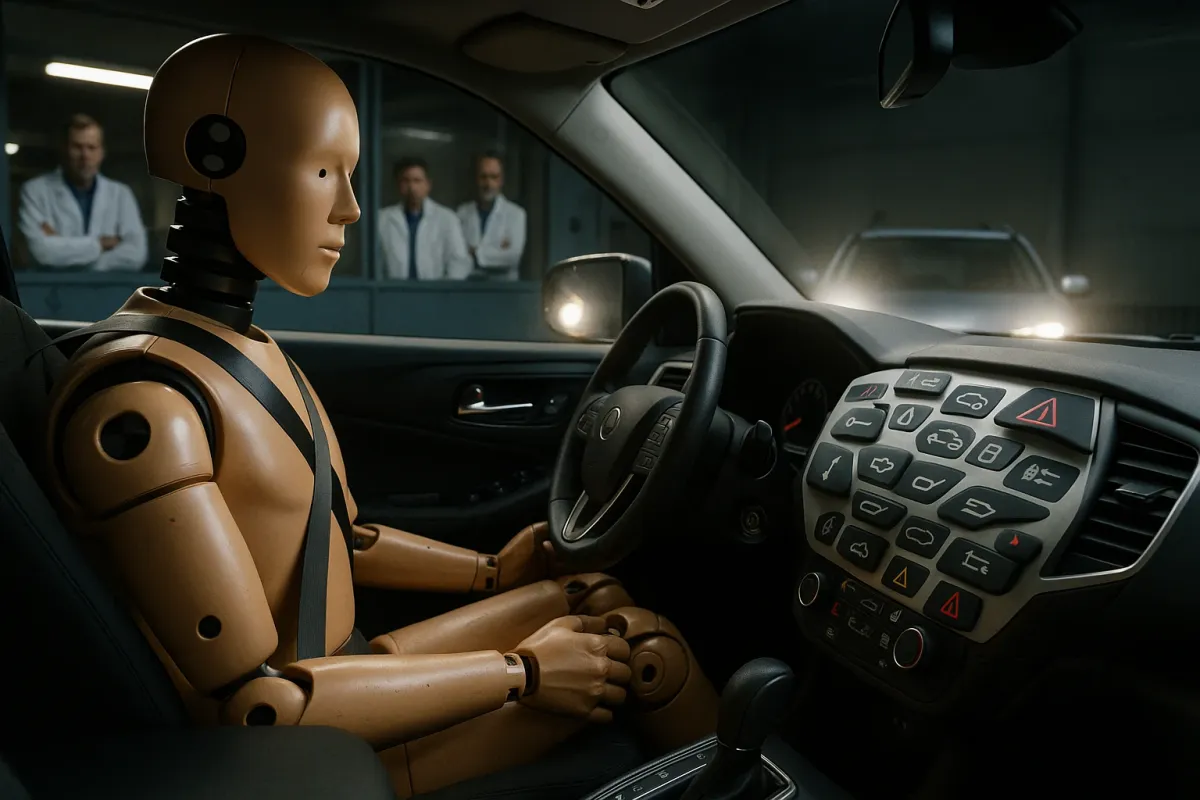
When you narrow your SUV shortlist, go beyond the official PDF reports. Seek out high‑quality crash‑test videos of your candidates. Watch the slow‑motion replays of side impacts and small‑overlap crashes. Observe how the cabin holds its shape, how airbags deploy around the head and torso, and how much intrusion you see in the footwells and door structures. Then, complement this with well‑documented owner experiences—particularly those from families who have unfortunately experienced real‑world crashes and chosen to share their stories. Patterns emerge quickly: consistent praise for stable handling in evasive maneuvers, or recurring complaints about inattentive lane‑keeping or over‑sensitive braking alerts.
Just as the internet has become skilled at spotting poor spacing on a sign from a single photo, you can train your eye to see beyond the marketing gloss of an SUV. The question to keep asking is simple, yet profound: When everything goes wrong in an instant, how does this vehicle behave? Ratings, videos, and authentic stories together provide the most complete answer you can get without ever wishing you had to learn it firsthand.
Conclusion
The sudden popularity of “bad spacing” design posts is more than a moment of online amusement; it’s a reminder that our world now pays attention to details once considered too minor to matter. In signage, a misplaced gap earns a laugh. In an SUV’s crash structure or software logic, a similar oversight can define a family’s future in a single second.
For families shopping today, a truly premium SUV is not just the one with the most screens, the richest leather, or the boldest grille. It is the one whose safety margins—its geometry, restraint tuning, and driver‑assistance calibration—have been refined with the same care a master typographer gives to a timeless book. Read beyond the stars and badges, examine the subtests, test your child seats, and let independent videos and shared experiences guide your instincts.
In a world newly fluent in the language of design flaws, treating safety ratings with that same discerning eye is not paranoia; it is the new standard of quiet luxury: the confidence of knowing that the details you cannot see have been considered as carefully as the ones you can.
Key Takeaway
The most important thing to remember from this article is that this information can change how you think about Safety Ratings.