For families who expect more from their SUV than a polished brochure and a row of gold stars, safety is not a checkbox; it is a philosophy. The modern safety rating landscape is dense with acronyms, crash-test dummies, and carefully staged impacts—but your daily life is anything but staged. This guide looks past the surface to explore how discerning families can interpret safety ratings with nuance, context, and an eye for the details that quietly reshape everyday confidence on the road.
The Architecture of Safety: Why Structure Matters More Than Marketing
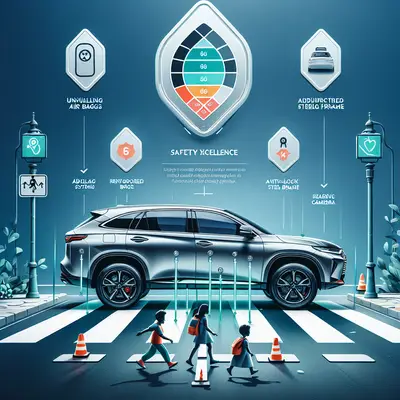
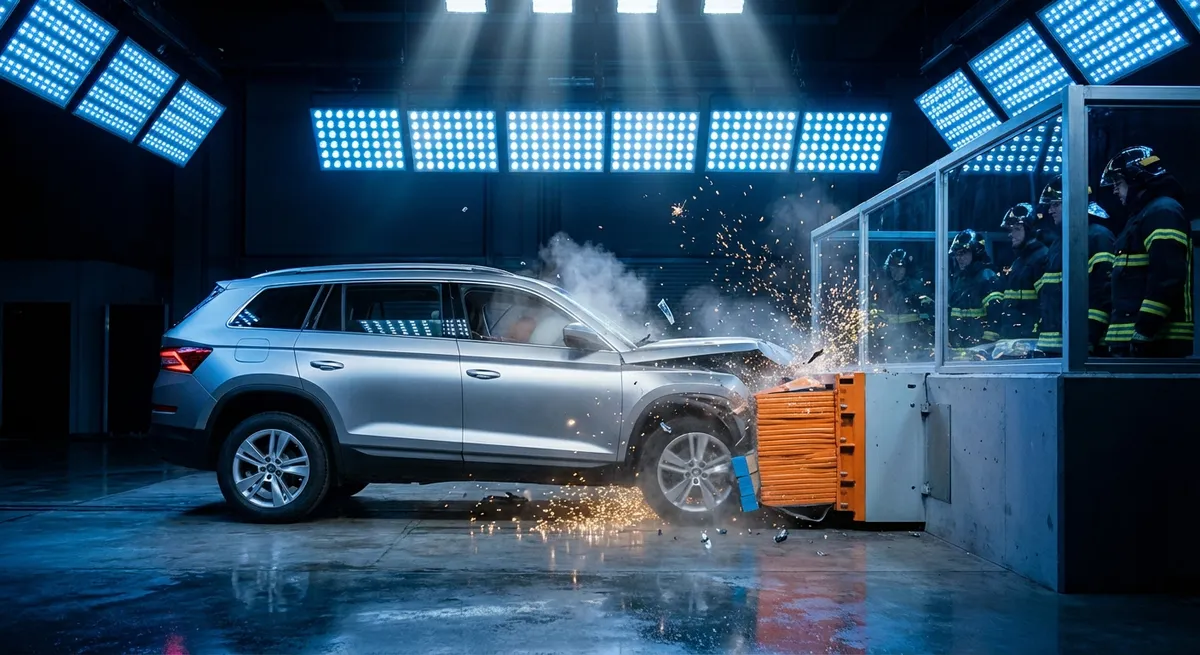
Most safety ratings start with crash test outcomes, yet the real story begins with the vehicle’s underlying architecture. The way an SUV channels and absorbs impact forces—through its frame, high-strength steel, and crumple zones—determines how energy is managed before it ever reaches occupants. Ratings from the National Highway Traffic Safety Administration (NHTSA) and the Insurance Institute for Highway Safety (IIHS) offer clues: side-impact and small overlap front tests, roof-strength assessments, and detailed injury metrics highlight how a vehicle’s structure holds up when reality intrudes.
A family-focused SUV should demonstrate consistency across test categories rather than a single eye-catching score. For example, an excellent frontal rating paired with merely adequate side-impact performance may hint at compromises in structural reinforcement. Likewise, a strong roof strength rating isn’t just about rollover protection; it reflects the rigidity of the cabin and its ability to preserve survival space in severe collisions. When reviewing ratings, look beyond the headline letter or star grade and pay attention to how uniformly the vehicle protects different seating positions and body regions.
Exclusive Insight #1: The Second Row Is the True Test of a “Family” Safety Rating
Traditional safety ratings have historically focused on front-seat occupants, but families live in the second row—and increasingly, the third. Many SUVs earn impressive scores for the driver and front passenger while offering less sophisticated protection systems for rear occupants. For a family buyer, this imbalance is more than a footnote; it redefines what “safe” actually means.
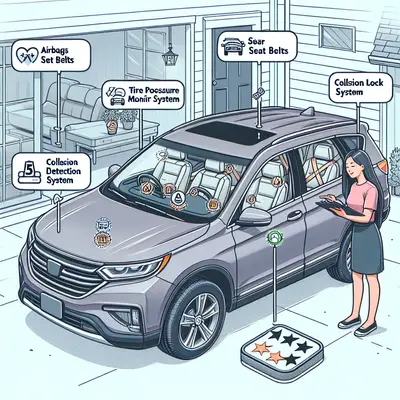
The IIHS has begun introducing updated moderate and small overlap tests that better evaluate rear-occupant protection, including injury risk to the head, neck, and chest. When comparing SUVs, look for models that explicitly reference rear-seat safety in their crash-test descriptions and manufacturer materials. Pay attention to whether rear seating positions feature pretensioners and load limiters on seatbelts, side-impact airbags that meaningfully cover the rear, and head restraints designed with taller adolescents in mind. A truly family-oriented SUV demonstrates a holistic approach: the front-row experience sets the tone, but the second row is where its commitment to your children is most clearly revealed.
Exclusive Insight #2: Advanced Driver Assistance Systems—Consistency Over Complexity
Advanced driver assistance systems (ADAS)—such as automatic emergency braking, lane-keeping support, and blind-spot monitoring—can dramatically influence real-world safety, yet ratings often compress their presence into a simple “available” or “standard” label. For a discerning family, what matters more is how consistently these systems operate, how intuitively they’re designed, and how early they intervene.
When evaluating safety ratings, go beyond the yes/no checkboxes. IIHS and some automakers now differentiate between daytime and nighttime performance for pedestrian detection and automatic emergency braking. A system that excels only in daylight is misaligned with the reality of evening school pickups, late dinners, and weekend road trips. Look for SUVs whose safety suites are not just comprehensive but standard or widespread across trims; a vehicle that reserves its best protective technology for top-tier models is sending a clear message about priorities. The most family-conscious designs integrate ADAS unobtrusively, offering subtle steering nudges, early audible alerts, and well-calibrated braking rather than abrupt or unpredictable interventions.
Exclusive Insight #3: Child Seat Reality Check—Ratings Don’t Tell the Whole LATCH Story
Official ratings tend to underplay a surprisingly complex daily ritual: installing and adjusting child seats. Even SUVs with excellent crash protection can frustrate parents with awkward LATCH anchor placement, hard-to-access tether points, or seat contours that fight secure installation. This is where careful reading of IIHS LATCH ease-of-use evaluations and owner feedback can unveil a more complete picture.
A refined family SUV offers more than the required number of anchors; it designs the entire seating environment around real-world child-seat use. Look for wide rear doors, generous second-row legroom that still leaves space for front passengers, and third-row access that doesn’t require contortions when a child seat is already installed. Hidden yet crucial details include clearly labeled tether anchors that don’t require digging behind headrests, and cushion firmness that supports, rather than distorts, a properly tightened base. While ratings can highlight basic compliance, it is the integration of child-seat practicality into cabin design that subtly elevates daily safety and serenity.
Exclusive Insight #4: Nighttime Visibility—The Often Overlooked Safety Multiplier
Headlight performance rarely receives the attention it deserves, yet it profoundly shapes a family’s sense of confidence during evening drives. The IIHS headlight ratings are one of the most understated but revealing safety metrics: they evaluate illumination distance, glare for oncoming drivers, and beam uniformity. For many SUVs, headlight quality can vary significantly by trim or even wheel choice, quietly reshaping safety in ways that brochures rarely emphasize.
Families should read headlight ratings as seriously as crash scores, particularly if their routines include pre-dawn commutes, winter evenings, or long highway journeys. Vehicles with adaptive headlights that pivot into curves, automatic high beams with nuanced control, and well-calibrated LED units can meaningfully reduce fatigue and improve reaction time. This is especially important on suburban or rural roads where pedestrians, cyclists, and wildlife can appear unexpectedly. While a five-star crash rating speaks to how an SUV behaves in an accident, superior headlights help prevent that accident from occurring in the first place.
Exclusive Insight #5: The Harmony Between Mass, Maneuverability, and Braking
It is tempting to equate size and weight with safety, but the relationship is more nuanced for families. Larger SUVs do offer advantages in multi-vehicle collisions, yet excess mass introduces its own trade-offs in emergency handling and stopping distance. Safety ratings and technical specifications together can reveal whether an SUV has been engineered to balance protection with agility.
Seek out braking distance tests, stability control evaluations, and rollover-resistance assessments that go beyond regulatory minimums. A truly well-resolved family SUV will combine a robust structure with precise steering, responsive brakes, and a suspension tuned to remain composed during abrupt maneuvers. Pay attention to whether advanced braking and stability systems are calibrated to work seamlessly with the vehicle’s weight and center of gravity, particularly in models equipped with three rows and added cargo. Families benefit most from SUVs that feel confident but not ponderous—vehicles that can avoid danger gracefully rather than relying solely on crashworthiness to mitigate it.
Reading Ratings Through a Family Lens
Safety ratings are invaluable, but they are inherently simplifying tools—attempts to compress complex engineering into an accessible format. For a family investing in an SUV that will escort children to school, grandparents to dinners, and everyone on cross-country holidays, the goal is not just to identify the “safest” model on paper, but the one whose safety philosophy aligns with how you truly live.
Consider crash tests as the foundation, then layer in second-row and child-seat realities, ADAS sophistication, nighttime visibility, and the driving dynamics that allow you to avoid danger altogether. When viewed through this more refined lens, certain SUVs distinguish themselves not only by how they perform in controlled impact scenarios, but by how consistently they protect, support, and reassure your family in the unscripted rhythm of everyday life.
Conclusion
For discerning families, safety is less about chasing a badge or a star and more about recognizing coherence: an SUV whose design, structure, technology, and everyday usability all point in the same protective direction. By looking beyond the headline scores and examining second-row protection, ADAS execution, child-seat practicality, headlight performance, and the balance of mass and maneuverability, you transform safety ratings from static numbers into a dynamic, real-world narrative. The most compelling family SUVs are those where that narrative feels quietly complete—where every journey, from the shortest school run to the longest holiday drive, is underpinned by thoughtful, deeply integrated safety.
Sources
- [NHTSA 5-Star Safety Ratings](https://www.nhtsa.gov/ratings) - Official U.S. government crash test results and explanations of test procedures and rating criteria
- [IIHS Vehicle Ratings](https://www.iihs.org/ratings) - Detailed crash test results, headlight evaluations, LATCH ease-of-use ratings, and updated rear-occupant protection assessments
- [IIHS: Advanced Driver Assistance Systems](https://www.iihs.org/topics/advanced-driver-assistance) - Research and overviews on how ADAS features affect crash risk and real-world safety outcomes
- [IIHS: Evaluating Child Seat LATCH Hardware](https://www.iihs.org/ratings/child-seat-latch) - Methodology and findings on LATCH usability and its impact on correct child seat installation
- [NHTSA: Headlights and Visibility Safety Topics](https://www.nhtsa.gov/road-safety/headlights) - Government guidance on headlight performance, visibility, and their role in preventing crashes
Key Takeaway
The most important thing to remember from this article is that this information can change how you think about Safety Ratings.