For millions of families, this week’s viral Reddit thread—where people confess the everyday things they once thought were “luxuries” because they grew up poor—is more than a nostalgic scroll. It’s a quiet reminder that safety, comfort, and even reliability have long been framed as optional upgrades rather than essentials. While social media debates what counts as a “treat,” automakers are rolling out family SUVs where advanced crash protection, driver‑assist tech, and cabin comfort are bundled into premium‑sounding packages that many buyers quietly opt out of to save a few thousand dollars.
In other words: the same mindset that once made air‑conditioning or eating out feel extravagant is now shaping which safety boxes get ticked on your next SUV order form. As 2025 model‑year family SUVs roll into showrooms—with updated NHTSA and IIHS results arriving almost weekly—this cultural conversation about “luxury” is happening at exactly the moment when the safety gap between base and well‑equipped trims has never been more pronounced.
Below are five refined, timely insights to help families cut through the noise and invest where it genuinely matters.
1. Safety Is No Longer a “Luxury Package”—But Trim Levels Still Hide Gaps
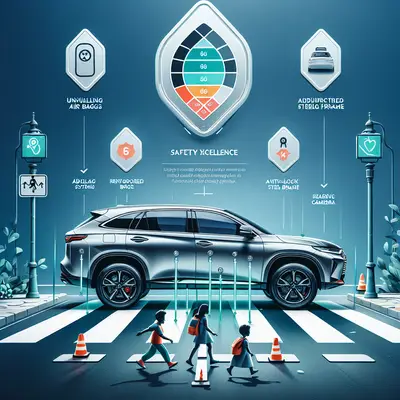
The stories going viral about people who grew up thinking “two-car families” or “flying on vacation” were luxuries have a quiet automotive parallel: for years, top crash protection and advanced driver aids were reserved for upper trims or premium brands. That’s changing, but not uniformly. In 2025, many mainstream family SUVs—think Honda CR‑V, Toyota RAV4, Hyundai Tucson, Kia Sorento—now include automatic emergency braking, lane‑keeping assistance, and adaptive cruise control as standard, responding to new industry expectations and IIHS pressure.
Yet the nuance lies in the trim ladder. The base model may technically have AEB, but the full collision‑avoidance suite—pedestrian detection in low light, junction‑turning assist, or superior blind‑spot intervention—often lives one or two trims up. A 2025 mid‑size SUV might advertise “standard safety,” while the top IIHS “Top Safety Pick+” performance was actually achieved in a higher‑spec model with optional headlights or enhanced sensors. For families, the elegant move is to read beyond the brochure: match the actual IIHS/Euro NCAP test vehicle configuration against the trim you’re considering. The safest choice may be a modestly priced mid‑trim with thoughtfully chosen options, not the stripped‑down base.
2. Headlights and Nighttime Tech: The New Safety Status Symbol
As conversations about “luxury” swirl online, one of the most quietly elitist safety features in the SUV world is also one of the least discussed: high‑performance headlights. IIHS has repeatedly shown that headlight quality can be the difference between avoiding a collision and simply recording it more clearly on your dashcam. Yet automakers still reserve the best LED or matrix units—those that earn “Good” or “Acceptable” scores—for upper trims or packages marketed as premium or aesthetic upgrades.
In 2025, families who frequently drive at night, during winter, or on unlit suburban roads should treat headlight performance as non‑negotiable. Look up your SUV’s specific headlight rating on IIHS, note whether the best mark applies to all trims or only those equipped with upgraded units, and be willing to follow the rating, not the trim name. Paired with improved pedestrian detection and cross‑traffic alerts, the right lighting suite turns a routine school‑run crossover into a substantially safer long‑haul family companion—without changing the badge on the grille.
3. The “Quiet Cabin” Is More Than Comfort—It’s a Safety Asset
In that viral thread, many users described double‑pane windows, noise insulation, or quiet hotel rooms as things they once associated with wealth. In the family SUV arena, this notion of “quiet equals luxury” often nudges shoppers to dismiss acoustic glass and advanced sound deadening as indulgent add‑ons. Yet research increasingly links cabin noise and sensory overload to driver fatigue, slower reaction times, and irritability—especially on long journeys with children.
Premium‑leaning SUVs and well‑equipped trims now use laminated front glass, enhanced door seals, and active noise cancellation to create calmer interiors. This isn’t simply about feeling insulated from the outside world; it keeps the driver’s mental bandwidth available for real‑time decision‑making, traffic monitoring, and early hazard detection. When you test drive, pay attention not only to acceleration and ride, but to how easily you can converse in the third row, how intrusive road roar is on coarse asphalt, and whether your own pulse settles after 20 minutes behind the wheel. In 2025, a truly family‑oriented “safety rating” should quietly include how well the SUV protects the driver’s concentration.
4. Crash Test Ratings Are the Baseline—How the Car Helps You Avoid the Crash Is the Differentiator
As the economy keeps families acutely aware of every dollar, it’s tempting to treat a five‑star NHTSA or “Good” IIHS crash score as the final word. But the latest ratings arriving this season, especially from IIHS’s updated moderate overlap and side‑impact tests, reveal another story: modern SUVs are generally excellent at protecting occupants in many types of crashes. The true differentiation in 2025 is how proficiently a vehicle helps your family avoid those crashes in the first place.
Focus your attention on how well systems like forward collision warning, automatic emergency braking, lane‑centering, and adaptive cruise control perform in independent tests. Look for models whose AEB systems do well in both daytime and nighttime pedestrian scenarios. Study whether the lane‑keeping system gently supports or constantly nags; a well‑tuned system that you leave on is safer than a hyperactive one that you disable after a week. This is where some premium brands excel, but several mainstream contenders—particularly from Hyundai, Kia, Toyota, and Honda—have closed the gap impressively for 2025. When you compare SUVs, treat crash test performance as the admission ticket, and active safety as the quiet competitive edge.
5. True Family Safety Includes Child Seats, Third Rows, and Everyday Maneuvers
Those viral “luxury” confessions often revolve around small moments: having space, having choice, not having to struggle for every basic comfort. In a family SUV, that translates to more than air bags and crash structures; it’s the day‑to‑day choreography of children, luggage, pets, and tight parking lots. The most sophisticated safety equation in 2025 includes child‑seat usability, third‑row access, and how forgiving the vehicle is of very human mistakes.
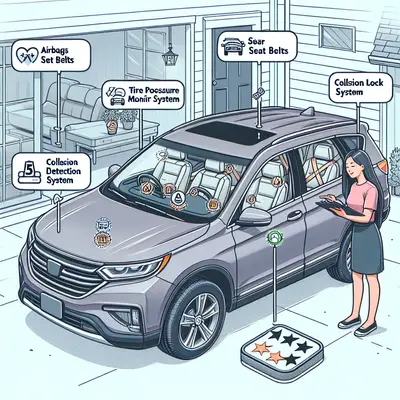
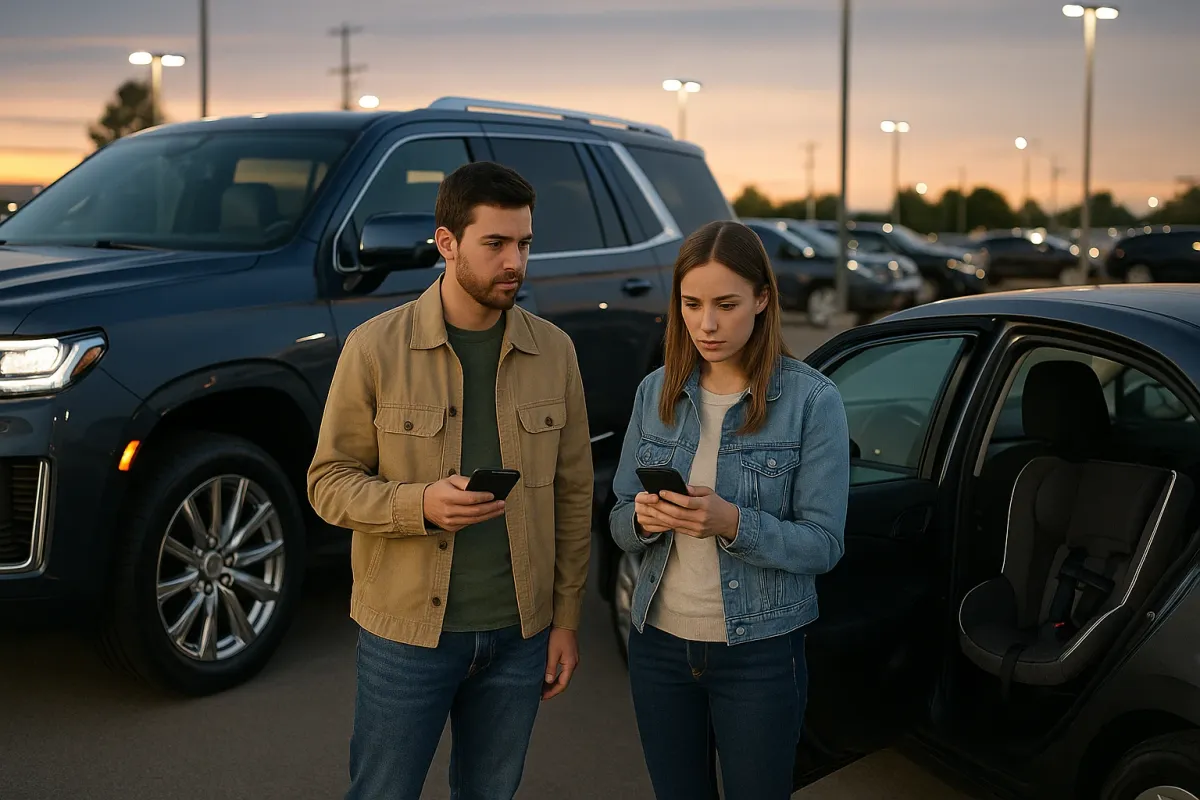
Before you buy, bring your actual child seats to the dealership. Test LATCH anchor accessibility, check how many positions support full‑sized seats, and see whether you can reach the third row without uninstalling boosters. Evaluate camera quality and coverage—360‑degree systems, high‑resolution rear views, and cross‑traffic alerts—and note how the vehicle behaves at walking speed in school pickup lanes or crowded driveways. Features like rear occupant alert, safe‑exit assist (which warns of approaching vehicles or cyclists when opening doors), and automatic braking while reversing are no longer gimmicks; they are tailored to the real environments where families most often experience low‑speed, high‑stress incidents. The most premium family safety experience is the one that makes these daily rituals feel almost effortlessly calm.
Conclusion
As social media debates what counted as “luxury” in the past, the family SUV market is quietly redrawing the line between indulgence and necessity. In 2025, a refined approach to safety goes beyond chasing badges and star counts. It means insisting that high‑performance headlights, sophisticated driver assistance, a serene cabin, and child‑friendly practicality are treated not as extravagances, but as foundational elements of family protection.
When you step into a showroom in the coming weeks, carry that viral conversation with you. Question which features are truly optional, and which simply appear luxurious because older generations were asked to live without them. The most elegant decision you can make is not the flashiest trim or the most imposing grille, but the SUV that quietly, consistently protects your family’s future—every school run, every late‑night drive, every mile.
Key Takeaway
The most important thing to remember from this article is that this information can change how you think about Safety Ratings.