There is a quiet moment every parent knows: the split second when a drive, a hike, or a holiday outing could so easily tip from “storybook memory” into “headline.” The recent case of 33‑year‑old Kerstin Gurtner, who was reportedly abandoned by her boyfriend and left to fatally freeze on Austria’s highest peak, has shaken Europe—not only for its human tragedy, but for what it reveals about our fragile relationship with risk and responsibility. While this story unfolded far from a highway, its core lesson translates directly to how we evaluate the SUVs we place our families in every day: safety is rarely about a single decision; it’s an ecosystem of preparation, protection, and accountability.
At Family SUV Review, we spend a great deal of time with crash-test charts, IIHS and NHTSA ratings, and advanced driver assistance systems. Yet this winter’s headlines remind us that “safety” is not just five stars on a brochure—it is the difference between an inconvenience and an irreparable loss. Inspired by the stark realities highlighted in the Gurtner case and the negligence charges now facing her boyfriend, we’re looking at family SUV safety through a colder, clearer lens: when things go wrong, what really stands between your loved ones and disaster?
Below are five exclusive, timely insights for families shopping in today’s SUV market—insights that go beyond buzzwords to the deeper question: in a crisis, will this vehicle quietly, competently, and predictably protect the people you love most?
1. “Five Stars” Are the Floor, Not the Finish Line
In the wake of high‑profile tragedies, we often hear the same refrain: “They knew it was dangerous, but they didn’t understand how quickly it could turn fatal.” On a mountain ridge, that might look like underestimating a storm. On the road, it’s assuming that any “safe‑looking” SUV is essentially as protective as the next. It isn’t.
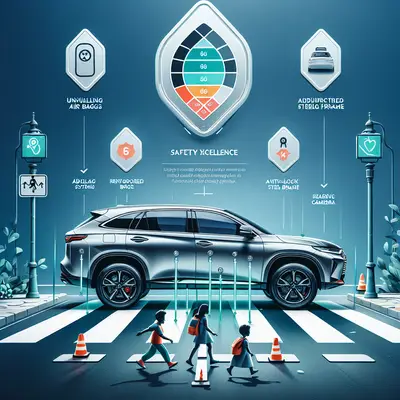
Most family buyers now seek five‑star crash test ratings from the National Highway Traffic Safety Administration (NHTSA) and “Top Safety Pick” or “Top Safety Pick+” designations from the Insurance Institute for Highway Safety (IIHS). But here’s the uncomfortable truth: those badges are the beginning of your safety evaluation, not the end. The modern safety bar has risen so high that an average rating can mask significant compromises, especially in areas like small overlap frontal crashes (the kind that happen when a distracted driver drifts across the centerline) and far‑side impacts that jolt occupants away from their seat belts.
A sophisticated safety search today should distinguish between SUVs that merely clear regulatory hurdles and those that exceed them with margin to spare. Look closely at:
- Small overlap crash performance, particularly for the front passenger side
- Rear‑seat protection scores in updated IIHS tests
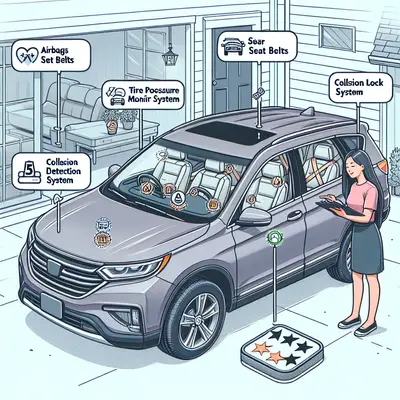
- Post‑crash survivability features such as automatic fuel cut‑off, battery isolation, and collision‑activated emergency lighting
As the Gurtner case underscores, survival often hinges on what happens in the first critical minutes of a crisis. Choose a vehicle that is engineered specifically for those minutes, not just for the laboratory conditions of a standard test.
2. The New Gold Standard: How Well Your SUV Protects the Rear Seats
One haunting detail in many negligence cases—whether on a mountain or a motorway—is that the most vulnerable person is often the least protected. In families, that usually means children in the second or third row. For years, most regulatory and consumer tests have centered on front occupants. The industry is only now catching up to a more family‑realistic question: how safe is the back?
Recently updated IIHS protocols have started punishing SUVs that excel in front‑row safety but neglect the rear. Some popular models that previously boasted enviable ratings have seen their scores decline once the focus shifted to the back seat. This matters for your family: in an actual crash, your children may face higher injury risk than you, simply because their seating position has historically been an afterthought.
When evaluating an SUV:
- Seek models with specific praise for rear‑seat dummy injury measures in IIHS moderate and small overlap tests.
- Confirm that rear side‑curtain airbags provide coverage across all rows, including the third row where teenagers and smaller adults tend to sit.
- Ask whether the SUV includes rear seat belt pretensioners and load limiters, the same refined restraint technology long reserved for the driver and front passenger.
Elegant family safety isn’t about protecting only the person behind the wheel; it’s about creating a uniformly secure cabin, row by row.
3. Beyond Beeps and Buzzers: Which Safety Tech Truly Helps in the Real World
The headlines from Austria are a chilling reminder that in extreme conditions, human judgment alone can be disastrously fallible. On the road, we like to believe we will never look down at a phone, push through fatigue, or misjudge a gap in traffic—yet insurers’ real‑world data tell another story entirely. This is where advanced driver‑assistance systems (ADAS) step in as a quiet, invisible second pair of eyes.
But not all safety tech is created equal. Many SUVs now offer impressive‑sounding packages—“Co‑Pilot,” “Guardian,” “ProPILOT,” “Driving Assistant”—that can mislead buyers into thinking the vehicle practically drives itself. The safest approach is to see these features not as autopilot, but as sophisticated guardrails fine‑tuned for the chaos of daily life.
Focus on three categories with proven real‑world benefits:
- Automatic Emergency Braking with pedestrian and cyclist detection, functioning in daylight and at night. This is the on‑road equivalent of noticing someone is in danger before they are aware of it themselves.
- Lane‑keeping and lane‑centering assist that can manage gentle curves and clearly marked highways, helping prevent drift‑induced head‑on or single‑vehicle crashes.
- Blind‑spot and rear cross‑traffic systems that actively intervene—not just flash an icon—if you attempt a dangerous lane change or reverse into oncoming traffic.
Ask your dealer for clarity on what each system will and will not do. A premium SUV should not just decorate the dashboard with icons; it should provide well‑calibrated, predictable support without the false promise of invincibility.
4. Cold‑Weather Reality Check: Winter Readiness Is a Safety Feature
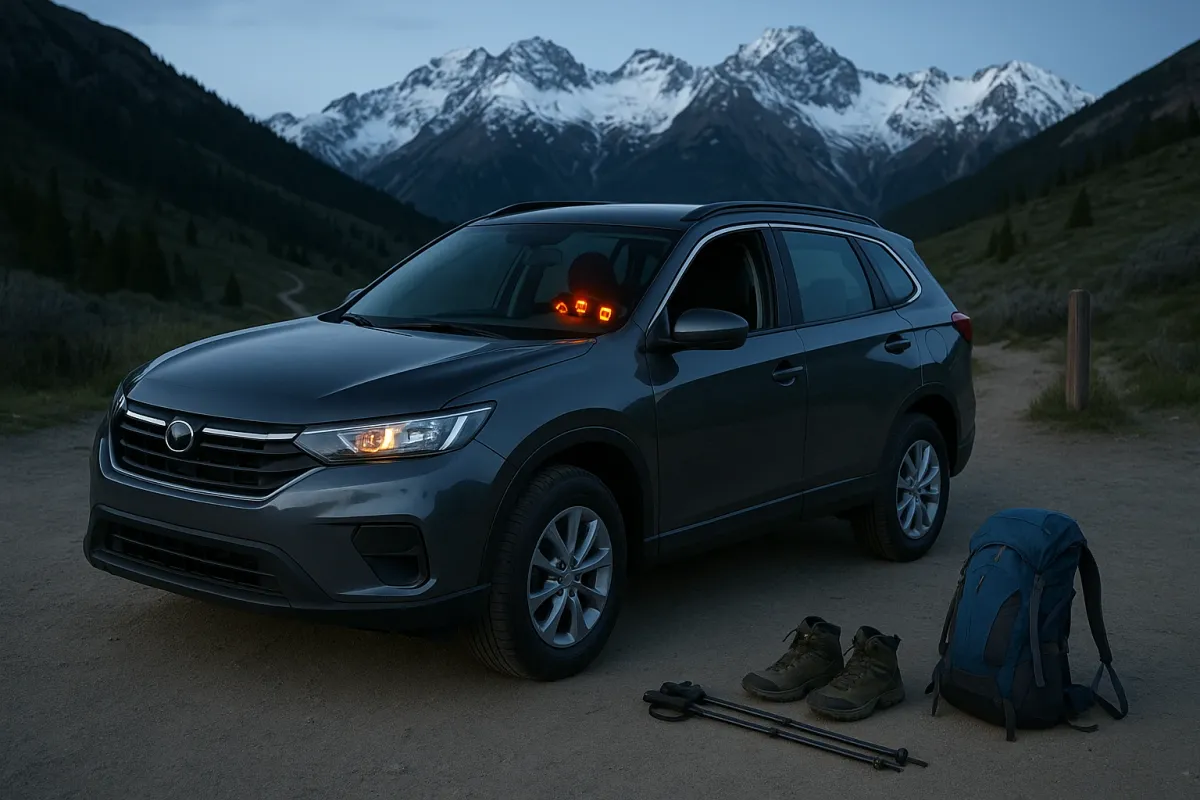
Kerstin Gurtner’s death on Austria’s highest peak is an extreme, mountain‑scale reminder that cold weather doesn’t merely inconvenience; it kills. While your family’s winter may look more like a ski weekend or a late‑night grocery run in sleet, the core risk is the same: exposure, loss of traction, and isolation when something goes wrong.
A genuinely safety‑focused family SUV acknowledges winter as a design condition, not an accessory opportunity. When comparing models, look for:
- All‑wheel drive systems that can transfer power intelligently—not just “on” or “off”—using predictive algorithms and individual wheel braking rather than blunt front/rear splits.
- Cold‑weather visibility features such as heated washer nozzles, rapid‑clear windshields, heated side mirrors, and rear camera washers that keep safety tech usable when you need it most.
- Battery and electrical architecture robust enough to support extended use of hazard lights, cabin heating, and emergency calling if you are stranded in freezing conditions.
Families in colder regions should also consider built‑in emergency telematics—systems like GM’s OnStar, BMW’s ConnectedDrive, or Hyundai’s Bluelink—that automatically contact emergency services after a severe impact. In an era when a single poor decision can land someone alone on a mountain or stranded off a rural road, that silent, automatic call can be the difference between rescue and tragedy.
5. The Human Factor: Why Safety Ratings Must Match Your Family’s Reality
The negligence charges now facing Gurtner’s boyfriend underscore an uncomfortable point: legal responsibility and moral responsibility often collide after the fact. In the automotive world, we see a quieter version of this tension. Manufacturers can rightfully claim compliance with standards, yet a vehicle can still be a poor fit for how your family actually lives and travels.
The most sophisticated safety strategy is not to chase the “safest SUV” in the abstract, but the one that aligns with your specific patterns of risk. Consider:
- Trip profile: Do you primarily drive in dense urban traffic, long rural stretches, or mountain passes? Each scenario elevates different risks—side impacts, fatigue, or rollovers—that particular models handle better or worse.
- Passenger mix: Are you regularly carrying toddlers in child seats, tall teenagers, elderly parents, or a mix? Rear‑facing seats demand different packaging and airbag behavior than adult occupants.
- Load and lifestyle: Roof boxes, bike racks, and trailers subtly alter an SUV’s dynamics, braking distances, and visibility. Ensure the platform you choose was engineered with towing and full‑load stability in mind, not merely rated for it on paper.
In many recent family SUV launches, we’ve seen a welcome trend toward configurable safety profiles, allowing you to tailor driver‑assistance alerts, follow distances, and lane‑keeping strength to your comfort and attentiveness. Used thoughtfully, these tools can act like a pre‑emptive safeguard against the slow erosion of caution that often precedes misjudgment—whether on a glacier or a freeway.
Conclusion
The story of a woman left to freeze on Austria’s highest peak feels distant from the leather‑stitched cabins and polished paintwork of today’s premium SUVs. Yet at its core lies the same stark divide that safety engineering has always tried to bridge: the razor‑thin line between miscalculation and catastrophe, between “we made it home” and “how did this happen.”
As you navigate showrooms and spec sheets this season, remember that safety is not a logo, a buzzword, or a single crash test result. It is a layered architecture of structure, technology, and foresight—designed to protect not just the driver, but every sleeping child, every distracted teenager, every grandparent in the third row. A truly family‑focused SUV anticipates the moments when your judgment may falter, the weather may turn, or events may spiral faster than you can react.
In a world where headlines remind us how quickly an ordinary day can become a tragedy, choose the vehicle that treats safety not as a feature, but as its defining purpose. Your family will never see most of what it does. That’s precisely the point.
Key Takeaway
The most important thing to remember from this article is that this information can change how you think about Safety Ratings.