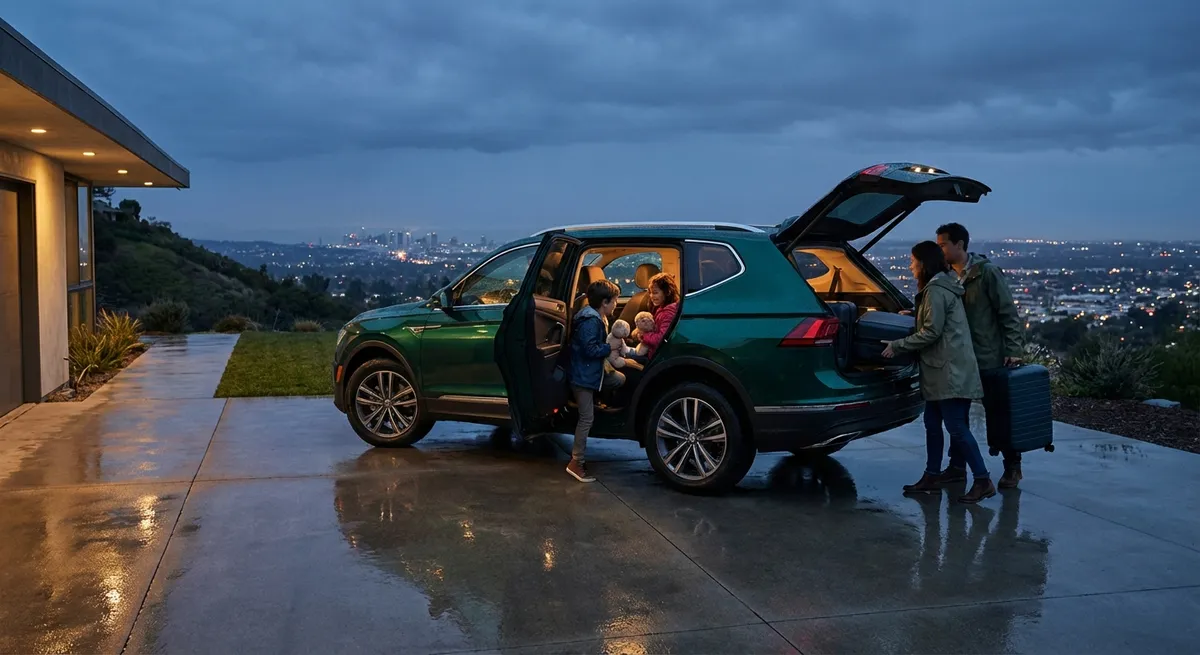
For families who refuse to choose between practicality and poise, the modern SUV is no longer just transportation—it’s a mobile extension of the home. At Family SUV Review, we look beyond spec sheets and sales pitches to understand how an SUV actually feels when it’s loaded with children, luggage, sports gear, and the quiet ambitions of everyday life. This review framework is designed for families who value refinement as much as reliability, and who see their SUV as both a sanctuary and a tool.
Below are five exclusive insights that shape how we evaluate SUVs for discerning families—subtleties that rarely make it into glossy brochures, yet profoundly influence daily satisfaction.
Insight 1: The “Calm Cabin” Factor
Many reviews talk about horsepower; fewer talk about heart rate. In family life, the real luxury is calm, not speed. When we assess an SUV, we pay close attention to what we call the “calm cabin” factor: how effectively the vehicle filters out the noise—literal and emotional—of a busy day.
This starts with measured cabin noise levels at highway speed, but it goes further. We look at how well the engine note disappears into the background during steady cruising, how little wind noise slips past the mirrors and roof rails, and whether road imperfections cause shudders or gentle, muted thumps. Families often underestimate how exhausting constant low-level vibration and noise can be on longer journeys; a quiet, composed cabin becomes a form of invisible self-care.
Materials contribute here as much as mechanical engineering. Soft-touch surfaces where elbows rest, solid-feeling door closures, and high-quality seals around windows all help create a sense of serenity. Well-tuned suspension that resists harshness without feeling floaty adds to this impression. In our reviews, we focus on how easy it is to have a normal conversation at 70 mph, whether a sleeping child stays asleep on a coarse stretch of asphalt, and if the cabin ambience still feels soothing after a long interstate drive. Serenity, in a family SUV, is an everyday luxury worth prioritizing.
Insight 2: Third-Row Reality, Not Third-Row Marketing
Many SUVs boast about three-row seating; far fewer deliver a third row that adults can tolerate and children actually enjoy. Our approach is to treat the third row as real living space, not a bullet point.
We don’t just measure legroom; we evaluate access. Can a child climb back there independently without acrobatics? Is the tilt-and-slide function simple, light, and one-handed—or does it require a wrestling match? We consider how easily a caregiver can reach a seat belt buckle in the third row without contorting awkwardly, and whether it’s practical to assist a toddler into a booster seat in the far back.
Once seated, we check thigh support, foot space under the second row, headroom with and without a panoramic roof, and the view out of the side and rear windows. Children are more patient when they have a sense of light and outward visibility; cramped, dark third rows can transform even short drives into a chorus of complaints. Vent placement and airflow matter as well—rear passengers should not be last in line for comfort on a hot afternoon.
We also consider how the third row affects daily functionality: how much cargo space remains usable with all seats up, whether stowing the third row is effortless or awkward, and how flat the floor ends up for bulky items like strollers, suitcases, or sports gear. A truly family-ready SUV doesn’t just advertise three rows; it makes all three feel thoughtfully integrated into everyday life.
Insight 3: The “Invisible Butler” – Intelligent Convenience Features
True sophistication in a family SUV often hides in the background. Our reviews highlight what we call “invisible butler” features—intuitive touches that anticipate needs without demanding attention.
These include hands-free tailgates that reliably recognize a foot motion even with a child on your hip and grocery bags in both hands, and keyless entry that unlocks gracefully when you approach—without false alarms. We look closely at seat-folding mechanisms: can the second and third rows be flattened from the rear with simple, clearly marked levers or buttons, rather than a sequence of awkward maneuvers?
Inside the cabin, we prioritize elegant, low-drama ergonomics. Thoughtful storage solutions—dedicated spaces for handbags, tablets, snack containers, and water bottles of various sizes—matter more in daily life than one extra speaker or a marginal performance gain. We evaluate how easy it is to load a family’s everyday items without creating clutter, including underfloor storage, cleverly positioned hooks, and side cubbies that secure loose items.
Infotainment systems are judged not by flashiness but by clarity. Are the most-used functions (climate, audio, navigation) accessible via simple physical controls or intuitive menus, reducing distraction? Do wireless Apple CarPlay and Android Auto connect consistently and quickly, or do they add friction to every departure? In a refined family SUV, technology should feel like a discreet assistant, not a demanding co-pilot.
Insight 4: Family-Centric Safety as a Daily Experience
Safety ratings are indispensable, but families live with safety systems—not with scores. In our reviews, we concentrate on how advanced safety and driver-assistance features behave in real-world family scenarios.
Adaptive cruise control, lane-keeping assistance, and automatic emergency braking can be transformative on long trips, but only if they operate smoothly and predictably. We comment on whether lane-keeping systems gently guide the vehicle or ping-pong between lane markers, and whether adaptive cruise reacts in a way that feels natural rather than abrupt for passengers. Subtlety here is critical; jerky interventions quickly undermine trust, especially with children on board.
We also examine visibility from every seat. Large windows, well-positioned mirrors, and a thoughtfully sloping hood line can reduce stress in urban driving and tight parking lots. High-quality 360-degree camera systems, with clear resolution and sensible viewing angles, are especially valuable for protecting small pedestrians and cyclists in busy neighborhoods.
Equally important is how safety is integrated into everyday tasks: child-seat anchors that are genuinely easy to access, rear-door openings that admit bulky rear-facing seats without contortion, and door-ajar warnings that clearly indicate which specific door isn’t fully closed. We also value rear-seat reminder systems and sensors that can help prevent children or pets from being accidentally left in the vehicle. Safety, at its most refined, is deeply embedded in routine habits rather than reserved for moments of crisis.
Insight 5: The Art of Long-Haul Comfort and Efficiency
The true test of a family SUV often appears on the third hour of a road trip, not the third minute of a test drive. Our reviews dedicate space to what we call long-haul composure: the blend of seating comfort, ride quality, efficiency, and energy management that shapes all-day journeys.
Seats are evaluated for more than softness; we look at contouring, lumbar support, and how fatigue builds (or doesn’t) over time. Second-row comfort gets as much attention as the driver’s seat, because older children and teens are spending as many hours there as adults. Adjustable recline and slide functions in the second row, along with individual climate controls where available, can transform the mood of a long drive.
Ride comfort is considered in tandem with body control. We look for suspensions that soak up potholes and expansion joints without feeling disconnected or “floaty” at speed. This composure directly influences whether a family exits the vehicle feeling refreshed or drained after a long day on the road.
Efficiency now extends beyond traditional fuel economy. For hybrids and electric SUVs, we focus on how realistically the stated range matches everyday use with a family on board—climate control active, devices charging, and cargo space in use. We also consider how easily fast charging or refueling fits into family routines, and whether range or fuel consumption becomes a constant concern on busy days. An SUV that balances power, efficiency, and comfort without constant management earns a distinct advantage for modern families.
Conclusion
For families seeking a premium SUV, the difference between “good enough” and deeply satisfying lies in the quiet details. A calm, composed cabin; a genuinely usable third row; intuitive convenience features; safety that supports daily life; and long-haul composure together create a vehicle that feels less like a purchase and more like a partnership.
At Family SUV Review, we evaluate SUVs as the moving heart of family logistics and memories—vehicles that must carry everything from school projects to weekend escapes with equal grace. When space meets thoughtful design and understated luxury, a family SUV becomes more than transportation; it becomes a refined, rolling version of home.
Sources
- [National Highway Traffic Safety Administration (NHTSA) – 5-Star Safety Ratings](https://www.nhtsa.gov/ratings) - Provides official crash-test results and safety ratings used to contextualize family SUV safety performance
- [Insurance Institute for Highway Safety (IIHS) – Vehicle Ratings](https://www.iihs.org/ratings) - Offers independent crashworthiness and crash-avoidance ratings that inform our perspective on advanced safety features
- [U.S. Department of Energy – Fuel Economy Guide](https://www.fueleconomy.gov/feg/findacar.shtml) - Supplies verified fuel economy and energy-use data for gasoline, hybrid, and electric SUVs
- [Edmunds – Car Reviews & Ratings](https://www.edmunds.com/suv/) - Provides comparative benchmarks and long-term impressions that complement our assessment of comfort and practicality
- [Consumer Reports – SUV Reliability & Owner Satisfaction](https://www.consumerreports.org/cars/suvs/) - Delivers reliability data and owner feedback that help frame long-term family ownership expectations
Key Takeaway
The most important thing to remember from this article is that this information can change how you think about SUV Reviews.