For families who value discernment over drama, safety is rarely a checkbox—it is the quiet foundation under every school run, weekend escape, and late-night airport pickup. Yet the world of safety ratings, crash tests, and acronyms can feel oddly blunt for parents who make decisions with nuance. This is where a more elevated reading of SUV safety begins: not with stars on a page, but with how those stars translate into the lived reality of daily family life.
Below, we explore five exclusive, refined insights that move beyond basic scores and into the subtleties that truly matter when you’re choosing a family SUV.
The Hidden Story Behind a “Top Safety Pick”
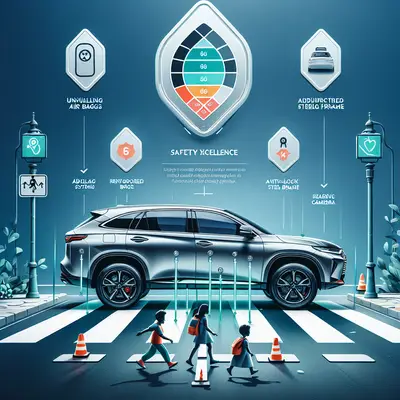
Safety badges—such as IIHS “Top Safety Pick+” or a 5-star NHTSA rating—are important, but they are not interchangeable trophies. They tell a careful story if you know how to read them.
The Insurance Institute for Highway Safety (IIHS) evaluates not just how a vehicle performs in a crash, but also how well it can help you avoid a crash in the first place. For families, this distinction is critical. A “Top Safety Pick+” typically indicates strong crashworthiness and advanced crash prevention and headlight performance. Meanwhile, the National Highway Traffic Safety Administration (NHTSA) focuses on overall crash performance and rollover risk, providing a 5-star scale that can feel simpler, but often less nuanced.
The refined approach is to look deliberately at which tests an SUV excelled in. For example, an excellent score in the IIHS small overlap front test on the passenger side is especially relevant if someone regularly rides up front—like a co-parent or caregiver. Similarly, strong side-impact ratings matter more if your children sit in the outboard rear seats near the doors. The result: instead of chasing badges, you’re aligning specific test strengths with your own seating patterns and daily routes.
The Quiet Power of Structure: Where Your Family Actually Sits
Underneath the styling and leather, a family SUV is a carefully engineered safety shell. The way this structure behaves under crash forces can determine not only whether occupants survive, but how well they are protected from serious injuries.
Many safety ratings summarize structural performance with simple terms like “Good” or “Acceptable,” yet the test notes often reveal more telling details—such as how much the cabin deformed, whether the steering column moved significantly, or if the door sill intruded toward the occupants. Families should pay special attention to how well the vehicle maintains survival space in both frontal and side-impact tests, particularly where children and teens actually ride.
If your children are in second-row outboard seating, scan for strong side-impact scores and comments on chest and pelvic injury measures. For families regularly using a third row, look for vehicles that have been explicitly tested for rear occupant protection and side curtain airbag coverage that extends to the very back. It’s not just how the SUV looks from the outside; it’s how intact that invisible protective cocoon remains when everything goes wrong.
Intelligent Safety Tech: Assistance, Not Intrusion
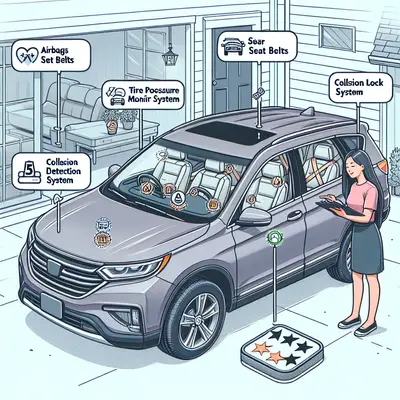
Advanced driver-assistance systems (ADAS) are often marketed as headline features—automatic emergency braking, lane-keeping, blind-spot monitoring. But discerning families know that not all systems are created equal, and not every “feature” feels refined in daily use.
A sophisticated safety evaluation goes beyond “Does it have it?” to “How gracefully does it work?” Smooth lane-keeping that gently nudges the vehicle rather than ping-pongs between lane markings, adaptive cruise control that brakes progressively instead of harshly, and blind-spot systems that give clear yet understated alerts—these are the hallmarks of well-calibrated technology that supports, rather than startles, the driver.
The most telling sign is how quickly the driver stops thinking about the system—because it feels intuitive, not intrusive. For families who share driving duties, this subtlety matters. A co-parent who dislikes hyperactive alerts may disable key features, undermining the very safety net you paid for. When test driving, dedicate time to experiencing these features on the types of roads you frequent: suburban lanes, school zones, highways with complex merges. The right SUV will feel like an attentive co-pilot, not an anxious backseat driver.
Child Seat Reality Check: Safety Ratings Meet Everyday Use
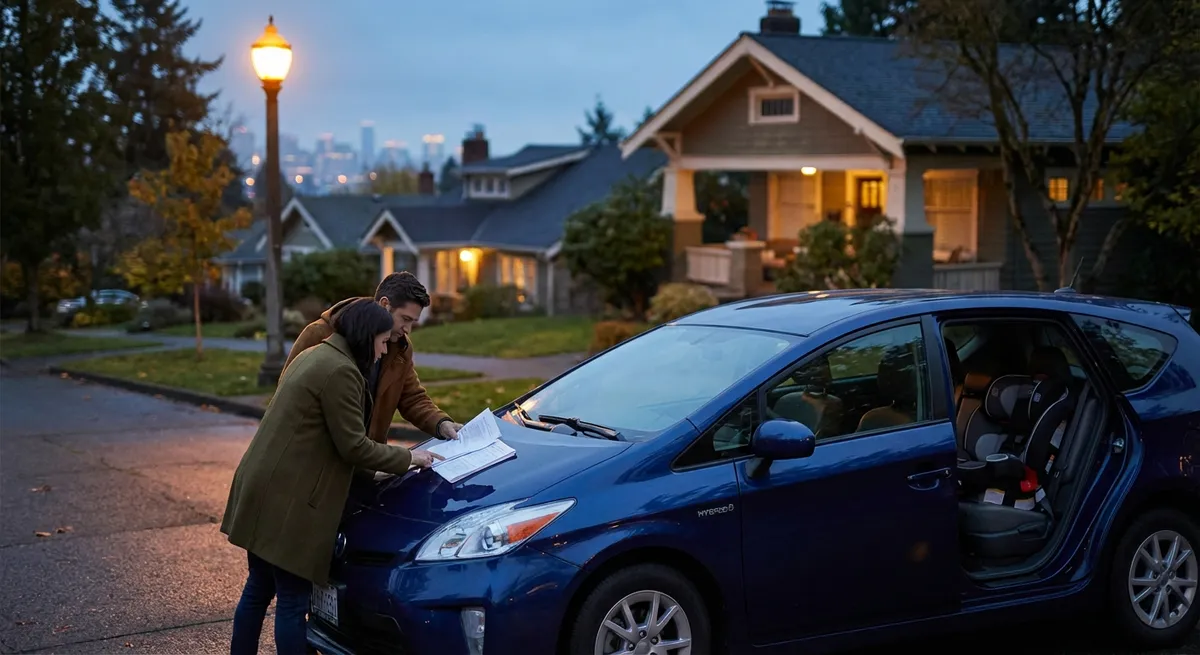
Crash test dummies do not wrangle car seats—but parents do. A sophisticated safety choice acknowledges that the safest child restraint is the one properly installed, every time, without compromise or frustration.
Some SUVs offer exemplary LATCH anchor access, clearly marked tether points, and rear door openings that make it genuinely easy to secure a bulky convertible seat or a rear-facing infant base. Others, despite strong safety scores, hide anchors behind rigid cushions, limit tether access for third-row seats, or create awkward angles that make a secure install challenging. Over time, small inconveniences can lead to rushed or imperfect installs, quietly undermining the promise of top-tier safety engineering.
Look for clear documentation on how many seating positions truly support LATCH, whether the third row is car-seat-friendly, and how many full-size seats you can realistically use at once. During a test drive, bring your actual child seats and insist on a full install—buckles, top tethers, and all. The best family SUVs feel like they were designed around children and caregivers, not merely adapted for them. That harmony between design and daily practice is a form of safety in its own right.
Safety Over Time: How Your SUV Ages with Your Family
A new SUV leaves the showroom with its full complement of structural integrity, airbags, and advanced technology, but true safety is a long-term relationship. Families often keep vehicles for eight, ten, or more years, spanning everything from rear-facing seats to newly licensed teen drivers.
Sophisticated buyers consider not only today’s ratings, but how well the model’s platform and safety suite are likely to age. Vehicles built on newer architectures often integrate additional high-strength steel, improved crumple zones, and more advanced sensor suites. Over a longer ownership period, these foundational advantages can matter more than a single-year feature update or a styling refresh.
Equally important is the continuity of support: Are over-the-air updates available to refine driver-assistance systems over time? Does the brand have a strong track record of responding promptly to safety recalls? Are key parts—such as radar sensors and cameras—positioned and protected in a way that reduces the likelihood of damage from minor incidents? For families, “safe” should mean resilient and supportable over the full arc of ownership, not simply impressive in the first year.
Conclusion
For families with a refined lens on life, safety is less about collecting stars and more about curating the right kind of security—discreet, deeply engineered, and seamlessly integrated into every journey. When you look beyond the headline ratings to structural integrity, real-world usability, technology behavior, and long-term durability, the differences between SUVs become quietly dramatic.
The most compelling family SUV is not merely the one with the highest score, but the one whose safety philosophy aligns with how your family truly lives, travels, and grows. That is where confidence turns from numbers on a page into genuine peace of mind on the road.
Sources
- [Insurance Institute for Highway Safety (IIHS) – Vehicle Ratings](https://www.iihs.org/ratings) - Official crash test results, safety awards, and detailed test notes for current vehicles
- [NHTSA – 5-Star Safety Ratings](https://www.nhtsa.gov/ratings) - U.S. government crash test ratings, rollover evaluations, and safety information
- [CDC – Child Passenger Safety](https://www.cdc.gov/transportationsafety/child_passenger_safety/index.html) - Evidence-based guidance on car seats, boosters, and seat belt use for children
- [National Safety Council – Advanced Driver Assistance Systems](https://www.nsc.org/road/safety-topics/adts-adas) - Explanations of ADAS technologies and how they contribute to real-world safety
- [Safe Kids Worldwide – Car Seat Safety Tips](https://www.safekids.org/car-seat) - Practical insights on installing and using child restraints correctly in everyday family vehicles
Key Takeaway
The most important thing to remember from this article is that this information can change how you think about Safety Ratings.