Law-enforcement agencies around the world have quietly become some of the most demanding “customers” of SUVs. So when a recent photo series of police puppies trying—and adorably failing—to look intimidating went viral (“29 Times Police Puppies Tried To Act Tough But They Just Looked Adorable Instead”), it unintentionally spotlighted something serious: the SUVs these working dogs ride in are often the proving ground for the very safety technologies families depend on.
Behind every charming image of a German Shepherd or Belgian Malinois perched in the back of a patrol SUV is a highly engineered safety environment. Departments from the NYPD to small-town sheriff’s offices increasingly specify advanced crash protection, reinforced structures, and specialized restraint systems—not only to protect officers and K‑9 partners, but to ensure their vehicles remain controllable in the worst‑case scenarios. For families shopping today, this convergence between fleet-grade durability and consumer comfort offers a revealing lens into which safety ratings and features actually matter beyond the brochure.
Below are five refined, real‑world insights—drawn from the demands of modern policing, current safety rating trends, and the viral fascination with “tough” puppies—that discerning parents should consider before choosing their next family SUV.
1. Why Police K‑9 Units Treat Crash Safety Ratings as a Non‑Negotiable
Those endearing police puppy photos hide a hard truth: a K‑9 is considered an officer, and departments are painfully aware of the consequences of an unsafe crash. That’s why many agencies specify SUVs that score at the top of the IIHS (Insurance Institute for Highway Safety) and NHTSA (National Highway Traffic Safety Administration) crash tests before they are ever fitted with cages, radios, or dog kennels.
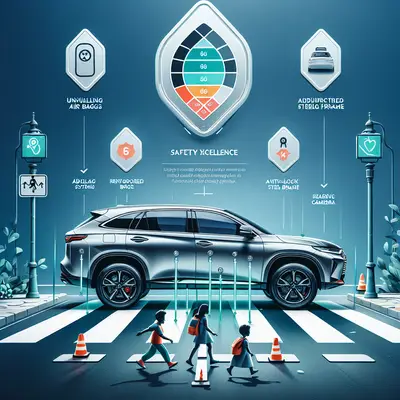
For your family, that means the same fundamental structures and crumple zones that protect a fully kitted K‑9 unit are often present in the civilian version in the showroom. When you see a “Top Safety Pick+” from IIHS or a 5‑star NHTSA rating, it isn’t just marketing—it’s part of the reason fleet buyers sign contracts. Look closely at the small-overlap frontal crash ratings and side-impact scores; these are the kinds of collisions that can compromise rear seating areas where children sit, just as they can endanger a K‑9 compartment. An SUV that performs gracefully in these severe tests is far more likely to maintain survivable space for your family in real-world impacts.
2. The Hidden Lesson of the K‑9 Kennel: Occupant Protection Is About Containment
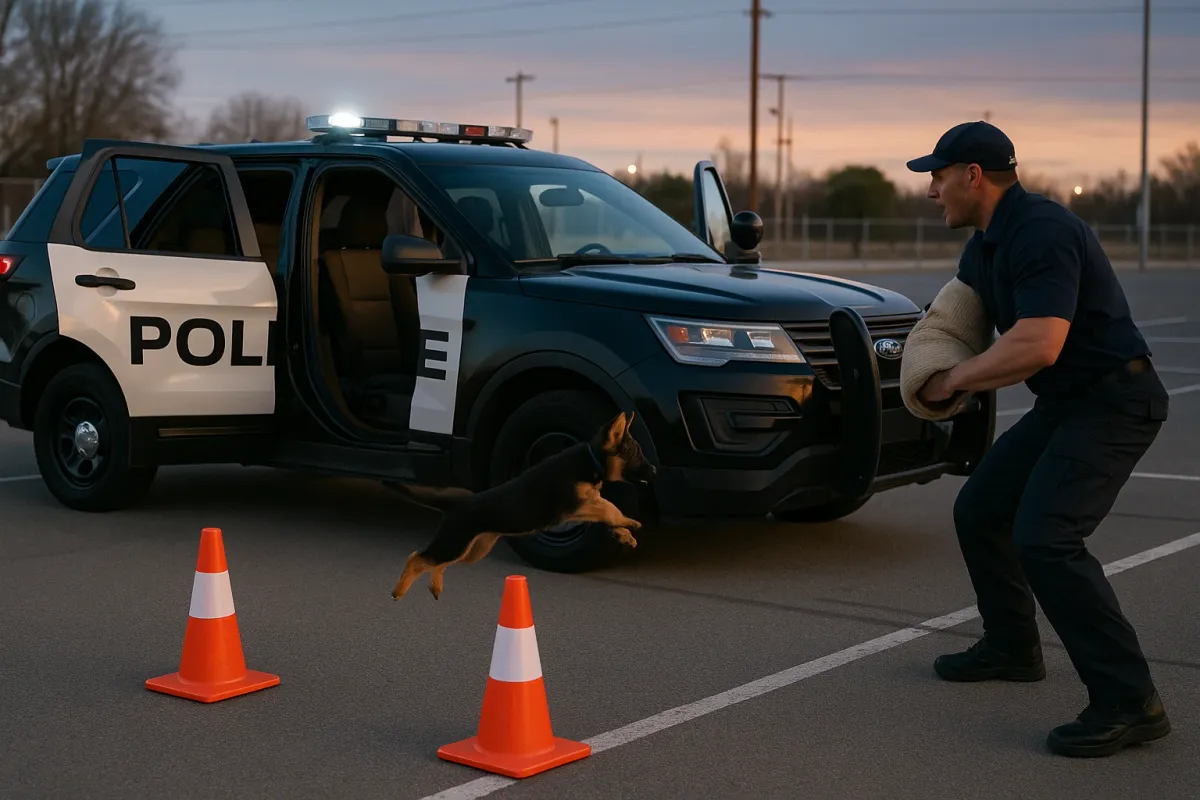
Police puppies may look comical as they tumble around their training pens, but once they graduate to patrol duty, they are secured in purpose-built kennels or restraint systems inside SUVs. Departments have learned—often the hard way—that an unrestrained dog in a collision becomes both a vulnerable passenger and a potential projectile. The solution is carefully engineered containment.
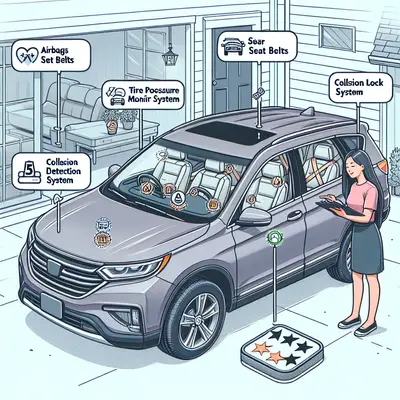
Families should mirror this philosophy. In safety terms, your child, your luggage, and your Labrador all need secure containment. When comparing SUVs, examine more than just the number of airbags. Evaluate:
- The quality and placement of ISOFIX/LATCH anchors
- The ease of accessing third-row anchors for larger families
- Integrated rear side-impact airbags that extend coverage for children in car seats
- Structural separation between cargo area and passenger space
Modern family SUVs from brands such as Volvo, Subaru, Hyundai, Kia, and Toyota have increasingly adopted design cues from utility and fleet vehicles—rigid cargo barriers, reinforced seatbacks, and thoughtfully positioned tether points—because containment is now recognized as a cornerstone of occupant protection, not an afterthought.
3. From Patrol Routes to School Runs: The Rise of Mission‑Critical Driver Assistance
Law-enforcement agencies have been early adopters of technologies like automatic emergency braking and lane-keeping assistance—not because they chase trends, but because their drivers cover high mileages under intense pressure. When you are navigating traffic with sirens blaring and a K‑9 barking in the rear, collision-avoidance systems stop being gadgets and start being lifelines.
Families can take their cue from these use cases. Not all advanced driver-assistance systems (ADAS) are equal, and safety ratings are slowly adapting to reflect this reality. IIHS now evaluates systems like:
- Automatic emergency braking with pedestrian and cyclist detection
- Lane-keeping and lane-centering performance
- Rear automatic braking and cross-traffic alert
When you test-drive, don’t simply confirm that these features exist in the brochure. Experience how gracefully they intervene. The most refined systems—often found in premium trims of mainstream models—offer firm, predictable braking and subtle steering assistance without panic or drama. That same polish that keeps a patrol officer in control during a chaotic pursuit will help a tired parent maintain composure during a late-night drive home with sleeping children.
4. Heat, Stress, and the K‑9 Alarm: Climate Safety as a New Frontier
One of the lesser-known innovations in police K‑9 SUVs is the integration of heat alarms and automatic climate safeguards. Because a K‑9 can succumb to heatstroke quickly in a sealed vehicle, many departments now install systems that monitor cabin temperature, automatically activate cooling, lower windows, or even sound external alarms if the interior becomes dangerously hot. Viral reports of K‑9 losses in previous years have pushed agencies to treat cabin climate as a safety issue—not a comfort feature.
Families should adopt the same mindset. As automakers race to add luxuries like tri-zone climate control, heated and ventilated seats, and remote start, there is a parallel, quieter revolution in climate-led safety:
- Cabin overheat protection systems that ventilate or cool the interior when parked
- Smartphone apps that let you verify temperature and lock status from afar
- Sunshades, UV-treated glass, and insulated roofs that reduce heat load
Tesla, Hyundai, Kia, and others have drawn attention with “Dog Mode” and cabin overheat protection—technologies originally marketed for pets but equally important for children. When evaluating SUVs, ask how the vehicle will behave if a summer errand runs long or a parking garage is unexpectedly sweltering. A model that actively protects against cabin overheating is, in essence, borrowing from K‑9 safety logic and applying it to your family.
5. The Quiet Influence of Fleet Durability on Family Peace of Mind
Those viral images of police puppies “on duty” underscore a broader reality: police fleets demand vehicles that withstand years of abuse—curb strikes, rapid acceleration and braking, dirt roads, extreme climates, and constant idling with heavy electrical loads. Manufacturers respond with reinforced components, upgraded cooling systems, and more robust braking hardware in their pursuit and special-service packages.
While your family may never jump a curb at speed, this fleet-grade durability trickles down. Platforms engineered to handle patrol duty often underpin the consumer versions you see in showrooms. For you, that translates to:
- Braking systems that remain confident even with a fully loaded cabin and luggage
- Suspension tuning that maintains composure on broken pavement and gravel
- Chassis rigidity that improves crash performance and reduces squeaks and rattles over time
As safety rating agencies increasingly factor in crash-avoidance technologies and structural integrity, SUVs born from platforms with fleet applications often have an advantage. When cross‑shopping, discreetly research whether the model line has a police, fire, or utility variant. It’s an elegant shortcut to understanding how serious the manufacturer is about long-term safety and reliability under stress.
Conclusion
The internet’s affection for soft‑eyed police puppies in outsized patrol SUVs is more than a charming distraction—it’s a window into how some of the most safety‑critical vehicles on the road are engineered and evaluated. K‑9 units, with their blend of precious cargo and high‑risk duty, quietly set a high bar for crash protection, occupant containment, climate safeguards, and structural resilience.
For discerning families, the lesson is clear: treat safety ratings as the beginning of the conversation, not the end. Look beyond star counts and badges to the real‑world logic that governs police fleets: protect every occupant, anticipate the worst moments, and design the vehicle so that when everything else feels chaotic, the SUV itself is calmly, quietly in control. In that sense, the same engineering that shields a “tough” but tender police puppy can offer your family something rare on today’s roads—genuinely sophisticated peace of mind.
Key Takeaway
The most important thing to remember from this article is that this information can change how you think about Safety Ratings.